







-
Examining Connections Between Off-Reservation Boarding Schools and Contemporary Mental Health Crises in Indigenous Communities
Amelia Benware
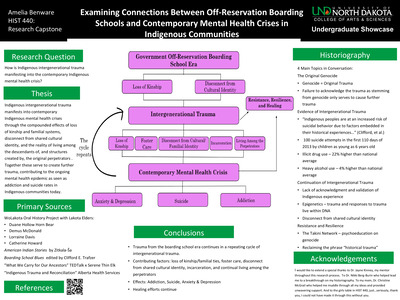
Intergenerational trauma in Indigenous communities dates to the early fifteenth century with the beginning of European colonization and continues to affect Indigenous communities through the present day. This project specifically examines the manifestations of intergenerational trauma in the Lakota community throughout North Dakota stemming from the off-reservation boarding school era. This research relied on a collection of oral histories gathered between 2016 and 2020 of enrolled members of the Lakota community who shared their personal experiences of coping with intergenerational trauma, and that of their close family and friends. This research establishes interdisciplinary connections among the fields of history, psychology, and public health to address gaps in understanding current mental health crises in Indigenous communities. Placing Indigenous mental health within a historical context draws clearer connections between past and ongoing trauma and the current rise in suicide rates, use of alcohol and other substances, incarceration, and Indigenous children in foster care. This research concludes that trauma from the off-reservation boarding school era continues in a repeating cycle of intergenerational trauma in which loss of kinship/familial ties, disconnect from shared cultural identity, foster care, incarceration, and continued living among perpetrators continue to cause high rates of addiction, suicide, and anxiety and depression.
-
Characterization of GATA3 Mutant T47D Breast Cancer Spheroid Development, Viability, and Drug Response
Paige Bonnet
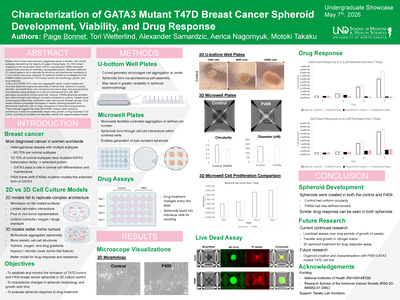
Breast cancer is the most commonly diagnosed cancer in women, with luminal subtypes representing the majority of cases. Among these, 10–15% contain mutations in the transcription factor GATA3, including the P409fs frameshift mutation that produces an extended, dysregulated protein. Because traditional 2D culture systems fail to replicate the structural and biochemical complexity of in‑vivo tumors, this study employed 3D spheroid models to investigate how the P409fs mutation influences T47D breast cancer cell morphology, growth, and drug response. Control and P409fs T47D cells were aggregated using U‑bottom plates and microwell platforms to generate spheroids of defined size. Spheroid circularity, diameter, and proliferation were monitored over seven days, and drug sensitivity was assessed using paclitaxel (0.5 µM) and abemaciclib (0.5 µM). Both genotypes successfully formed spheroids; however, P409fs spheroids exhibited less uniform borders and reduced circularity compared to controls. Despite these morphological differences, proliferation rates were similar between groups. Drug assays showed comparable decreases in viability following paclitaxel and abemaciclib treatment, with no major divergence in short‑term drug sensitivity. These findings suggest that while the P409fs mutation alters spheroid architecture, it does not substantially impact early growth or drug response in 3D culture, providing a foundation for extended viability and organoid‑based studies.
-
Media Depictions of Indigenous Peoples and the Battle of Sugar Point, 1898
Hunter Eickhoff
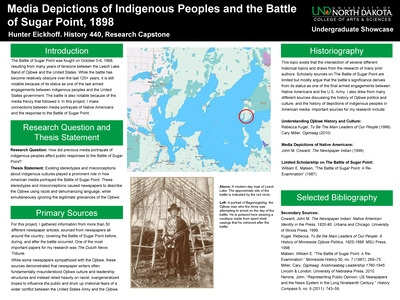
The Battle of Sugar Point generated a media frenzy that seemed greatly disproportionate for a battle of relatively little consequence. Newspapers ranging from tiny local papers to major nationally syndicated publications published headlines proclaiming that northern Minnesota was threatened by an all-out uprising of the Ojibwe, with large-scale violence sure to follow. Of course, no such uprising occurred. If one had, perhaps the Battle of Sugar Point would not exist in the relative obscurity that it does today. Why, then, was the press willing to stake such outlandish claims on next-to-no concrete evidence? Through my research, I argue that these inflammatory and exaggerated claims made by the newspapers stemmed from existing stereotypes about Native Americans, which often characterized them as primitive, violent, and inferior to whites. These stereotypes and misconceptions caused newspapers to describe the Ojibwe using racist and dehumanizing language, while simultaneously ignoring the legitimate grievances of the Ojibwe, which had been the true underlying cause that led to the outbreak of violence at Sugar Point.
-
Mapping Unmanned Warfare: Analyzing Drone Usage in the Russo-Ukrainian War Using Open-Source Social Media Data
Kayla Barral, Carter Pedersen, and Elise Stevens
The use of unmanned aerial vehicles (UAVs), or drones, has expanded significantly in modern warfare, reshaping operational dynamics by enabling precision strikes while reducing personnel risk. At the same time, the growth of open-source and social media–based reporting has created new opportunities to analyze military activity through publicly available information. This study examines whether patterns in social media–reported drone strikes can provide meaningful insights into operational behavior in the Russia–Ukraine war.
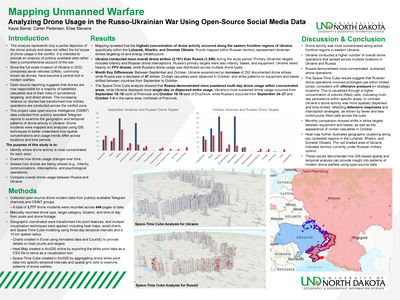
Using open-source intelligence (OSINT) collected from Telegram posts between September and October 2025, this research compiles documented drone strike events conducted by both Ukrainian and Russian forces. Much of the publicly available footage analyzed consisted of propaganda-oriented content intended to showcase military successes, recruit support, or influence public perception, which introduces potential biases into the dataset. Each incident was categorized by target type, drone type, location, and time of occurrence. The dataset was analyzed using Geographic Information Systems (GIS), including heat mapping and Space-Time Cube modeling with a 10 km radius and three-day temporal intervals to assess both spatial clustering and temporal persistence.
The results show distinct operational differences between the two actors. Ukraine conducted a higher number of strikes overall, primarily targeting infantry and engaging in drone interception activity. Russia employed a broader range of drone types and targeted a wider set of assets, including infantry, equipment, and military bases. Ukraine also demonstrated significantly higher interception rates. Both sides exhibited long-range strike capabilities, with Ukrainian strikes extending deeper into Russian territory.
Space-Time Cube analysis indicates that Ukrainian drone activity is generally more dispersed and temporally limited, while Russian operations are more concentrated and persistent within specific zones, suggesting sustained operational pressure. Heat map results further illustrate clustering in key contested regions, particularly Luhansk, Kharkiv, and Donetsk oblasts.
Taken together, these findings offer knowledge of how each country integrates drones into broader operational objectives. This study demonstrates how OSINT and GIS techniques can provide insight into observable patterns of modern drone warfare, while recognizing that the dataset reflects only publicly available information and not the full scope of military operations
-
Jacksonian Democracy: Triumph and Tragedy
Gabe Blumer
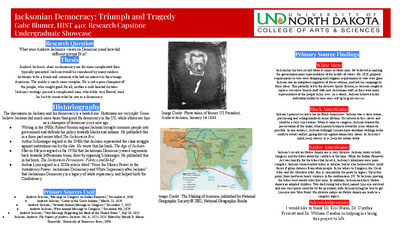
This poster presents an analysis of Andrew Jackson's presidential impact on democracy and discusses its strengths and weaknesses as a whole. It goes over the impact on white men, black Americans, and Native Americans in particular. For more details, see the associated capstone paper Jacksonian Democracy: Triumph or Tragedy?
-
Spatial Analysis of Heavy Metal Leaching Threats from North Dakota Landfills to Drinking Water Aquifers
Leila Campbell
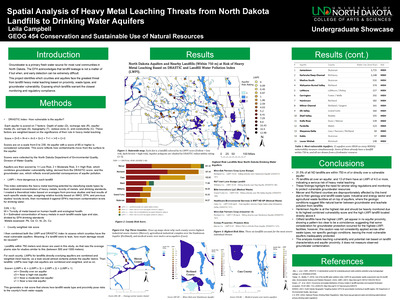
Groundwater is a primary fresh water source for most rural communities in North Dakota. The EPA acknowledges that landfill leakage is not a matter of if but when, and early detection can be extremely difficult. This project identifies which counties and aquifers face the greatest threat from landfill heavy-metal leaching based on proximity, waste types, and groundwater vulnerability, thereby indicating which landfills warrant the closest monitoring and regulatory compliance. The methodology combines two indexes. The DRASTIC index identifies aquifer vulnerability to surface pollution based on hydrogeologic factors. These factors are weighted by their significance to produce a score that reflects how easily contaminants migrate from the surface to the aquifer. The Landfill Water Pollution Index estimates heavy metal leaching potential by classifying waste types according to their estimated heavy metal concentration, toxicity, and drinking water standards. Both indexes are then combined into a composite risk score that evaluates how waste type and landfill proximity threaten each county's fresh water supply. The results identify which counties in North Dakota face the highest risk of heavy metal groundwater contamination, which aquifers are most vulnerable to leaching pollution, and which landfills should be following strict regulatory compliance. These findings highlight the need for stricter regulations and regular monitoring programs to protect vulnerable groundwater resources across North Dakota.
-

"Maniac Murderer of Six": Yellow Journalism in Early 20th Century North Dakota
Emma Kalk
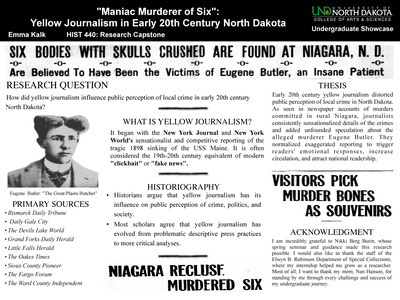
This project examines how early twentieth-century yellow journalism shaped public perception of crime in North Dakota through newspaper coverage of the Eugene Butler case. Following the 1915 discovery of six bodies beneath Butler’s former home near Niagara, North Dakota newspapers rapidly transformed the case into one of the state’s most sensational crime stories. Through analysis of regional newspaper articles, hospital accounts, and modern retellings, this project argues that journalists exaggerated details, repeated unverified claims, and relied on emotionally charged language to construct Butler’s public image as a violent “hermit” and “maniac.”
The project also explores contradictions within contemporary reporting, including disagreements over victim identities, Butler’s mental condition, and the circumstances surrounding the murders. Statements from hospital staff and local residents often conflicted with newspaper portrayals, revealing the extent to which sensational journalism shaped public understanding despite limited evidence. In addition, the paper traces how these early narratives influenced modern true-crime interpretations of the case, demonstrating the long-term impact of sensational reporting on historical memory.
Focusing on the Butler case, this project highlights how newspapers in a developing rural state adopted broader national trends in yellow journalism. Ultimately, it argues that the press did not simply report the events surrounding Eugene Butler, but actively shaped how the crimes were understood, remembered, and discussed for more than a century.
-
Hotspot Analysis of Nitrate and Arsenic Concentrations in Minnesota Well Water
Jadyn Keeler
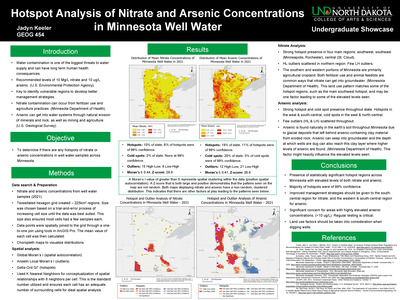
Water contamination is one of the biggest threats to water supply and can have long term human health consequences. It is key to identify vulnerable regions to develop better management strategies. This project utilizes hotspot and outlier geospatial analysis to locate areas across Minnesota with elevated levels of nitrate and arsenic in well water and better understand potential factors that might be influencing this. Statistically significant hotspots and cold spots were identified with up to 99% confidence. Hotspots of nitrate were located mainly in the south-central region while hotspots of arsenic were located primarily in the western and south-central portions of the state. Land use factors should be taken into consideration and extra attention should be given to these portions of the state.
-
From Sunshine to Sight Lost: AMD in North Dakota
Sidney J. Leciejewski and Diane Darland
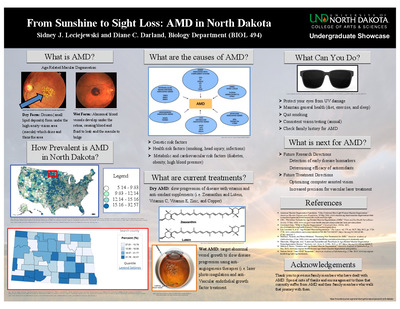
Age-related macular degeneration (AMD) is a progressive eye disease that directly harms the macula, which could eventually cause vision loss. The macula is an area on the back of the eye that contains cone cells, which allow for our color vision. Its location also allows us to have our central vision. There are two kinds: the dry and wet form, where the wet form is more extreme. The disease, itself, is highly prevalent in North Dakota, which is why it is important to note its causes and prevention methods. Some causes of AMD include genetic risks, health risks, and metabolic and cardiovascular health risks. There is no cure for the disease. However, there are treatments, more specifically antioxidant supplements for dry AMD and laser treatments for wet AMD. Things you can do to protect yourself include wearing sunglasses to fight UV rays, maintaining general health, no smoking, getting annual vision checks, and checking your family history. Additionally, there are future explorations that could be done to discover more about this disease for the benefit of the people. Overall, this poster showcases AMD’s increasing prevalence in North Dakota and factors you can utilize to protect yourself.
-
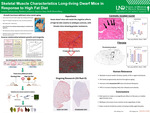
Skeletal Muscle Characteristics Long-living Dwarf Mice in Response to High Fat Diet
Landon Schumacher, Matthew Johnston, Jaspreet Osan, and Holly Brown-Borg
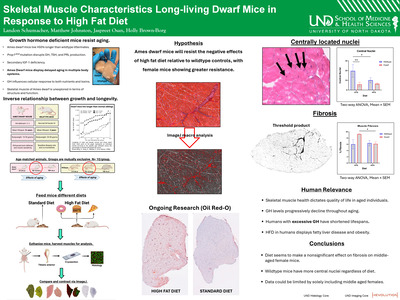
Introduction: The effects of high fat diet (HFD; 60% kcal: fat) on skeletal muscle in mice with postnatal growth hormone deficiency is relatively unknown. We compared the tibialis anterior (TA) muscle from middle aged female Ames Dwarf and Wildtype mice fed HFD for 16 weeks and standard diet (STD; 10%: fat) to see the impacts of a HFD on inflammation and fibrotic formation in the musculature. Methodology: Mice were euthanized after diet duration (age 10-12 months), and TAs were collected and frozen in OCT for cross-sectional cryosection. Ten um thick muscle was fixed to slides and stained with Oil Red-O (ORO), Picrosirius red (PSR), and Hematoxylin and Eosin (H&E). Images of the tissue were processed via ImageJ fibrosis (PSR) and centrally located nuclei (H&E). Results: Compared to control fed mice, no difference was observed between the Dwarf and Wildtype mice and diet in fibrotic infiltration or centrally located nuclei within the TA. Dwarf mice display significant increases in fibrotic area when fed the STD compared to the dwarf on HFD. Diet did not seem to have an effect on interior fibrosis on Wildtype mice. When compared to dwarf mice on STD, wildtype mice on STD show significantly more centrally located nuclei. The Wildtype mice on STD also had significantly more centrally located nuclei than wildtype mice on HFD. Conclusions: These findings indicate that diet does not play a large part in the formation of fibrosis or centrally located nuclei when comparing middle aged female Ames Dwarfs and Wildtypes. The reduction in fibrosis between the dwarfs on HFD compared to dwarfs on STD may be due to extracellular matrix remodeling resulting in a reduction in collagen protein between cells. Previous work in our lab has shown Wildtype mice display increased inflammation and fibrotic infiltration with age when on STD, and we think that HFD will exacerbate these findings.
-

Script to Sans: The Shift Toward Minimalist Branding
Angela Brayton and Abigail Derouard
It has become common for companies to do rebrands from more detailed, complex branding to simple and bold branding. With lettering, there has been a trend of companies shifting from script to sans serif typefaces. This pattern brought us to the question, why? It’s important to understand trends in graphic design like this one to get a better grasp of marketing strategies and consumer preferences. It’s also good practice as graphic designers to stay up to date with social and cultural shifts, so we can apply that knowledge and make smart design choices. While there isn’t much research on this change in particular, there is some on individual cases of rebranding, which is what we developed this project around. Specifically, the project focuses on 16 different case studies of companies that have rebranded from script to sans serif typefaces. The case studies explore the history of the selected brands and their logos, focusing on why they switched their branding. Three commonalities developed across the reasoning, one being a change in the company body (such as a shift in ownership), the second being a change to keep up with modern technology and trends, and the third being an outlier case, found with Pinterest. This outlier case was due to the lack of specific reasoning behind their logo and branding switch. It’s important to continue investigating changes in branding so we can learn from these instances how people interact with certain styles of graphic design and use that understanding in our own work.
-
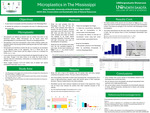
Microplastics in the Mississippi
Jozey Goodall
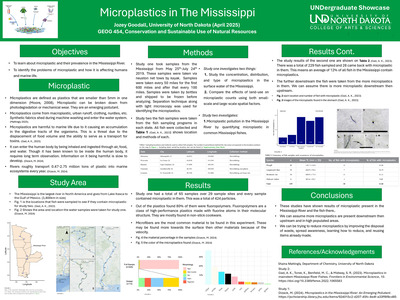
This poster explores the presence and impact of microplastics in the Mississippi River through the analysis of two research studies. The first study examined surface water samples to measure microplastic concentration and to assess how land use and geography influence their distribution along the river. The second study looks in on identifying microplastics in the digestive systems of fish collected from different locations along the river. Both studies have shown that microplastics are widespread throughout the river, with higher levels found downstream and in highly populated areas. The research highlights the ways in which microplastics enter freshwater environments, from urban runoff and wastewater to degraded consumer products, and how these pollutants can affect wildlife and humans. Fish are especially vulnerable, as microplastics accumulate in their stomach linings, potentially affecting their health and survival. The plastics can also work their way up the food chain, posing a possible risk to human health through the consumption of contaminated water or food. These findings stress the need for increased awareness and better waste practices. Reducing plastic usage, reusing materials, and improving disposal methods are all key steps in addressing this issue. By recognizing the sources and impacts of microplastics, we can begin to develop more sustainable habits and protect freshwater ecosystems.
Senior Capstone for GEOG 454: Conservation and Sustainable Use of Natural Resources with Professor Gregory Vandeberg.
-

Radiant Love and Knowledge: Near-Death Experiences in Modern America
Carsen Grave
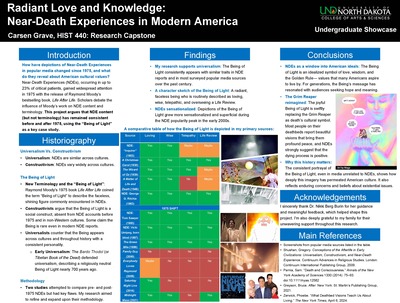
Near-Death Experiences (NDEs) are vivid, often transformative recollections of the dying process. Up to 23 percent of surviving critical patients and as many as 88 percent of lucid individuals on their deathbeds report such experiences. Most of these narratives describe an encounter with a radiant “Being of Light,” a godlike figure associated with profound and lasting improvements in well-being and spiritual outlook. Philosopher Raymond Moody introduced a systematic framework for NDEs in his 1975 book Life After Life, where he first labeled and popularized this figure. Since then, scholars have debated whether Moody’s framework described actual experiences or shaped how they are recalled, raising the question of whether NDE content is universal or culturally influenced. This historical presentation contributes to that discussion by comparing American NDE accounts and popular media depictions of the Being of Light before and after Moody’s publication. While terminology has changed over time, core portrayals of the Being of Light—depicted as loving, wise, telepathic, and overseeing a Life Review—have remained strikingly consistent. This suggests that NDEs contain universal features that are not shaped by cultural influences. The Being continues to serve as a powerful cultural symbol for love, knowledge, and hope.
-
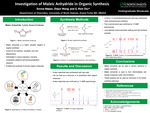
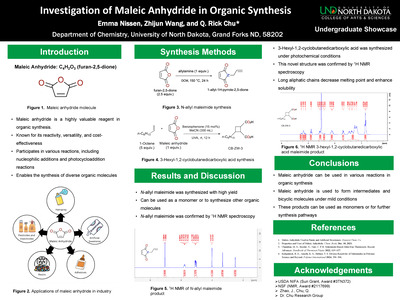
Investigation of Maleic Anhydride in Organic Synthesis
Emma Nissen, Zhijun Wang, and Qianli Rick Chu
This research explores the synthetic utility of maleic anhydride; a versatile and reactive compound widely used in organic and industrial chemistry. The study focuses on the synthesis of N-allyl maleimide and 3-hexyl-1,2-cyclobutanedicarboxylic acid. N-allyl maleimide, confirmed via ^1H NMR spectroscopy, was synthesized in high yield and shows potential as a monomer or intermediate in organic synthesis. Additionally, the photochemical synthesis of a novel compound, 3-hexyl-1,2-cyclobutanedicarboxylic acid, was achieved and characterized. Its long aliphatic side chain contributes to decreased melting point and increased solubility. These findings demonstrate maleic anhydride’s utility in forming intermediates and bicyclic compounds under mild conditions, supporting its continued relevance in materials and synthetic chemistry.
-

Social Experiences of Individuals with Autism in Adolescence and Adulthood: A literature review
Nichole Dumlao and F. Richard Ferraro
This literature review examines social experiences of individuals with Autism Spectrum Disorder (ASD) during adolescence and adulthood, addressing a critical knowledge gap regarding developmental trajectories and support needs across the lifespan. Despite increased ASD awareness, individuals face persistent social challenges, with research showing concerning rates of isolation. The purpose of this review is to understand how sensory processing differences and atypical gaze behaviors contribute to social outcomes in ASD. As such, three key questions were asked: How do social participation patterns change from adolescence to adulthood? What sensory-based subtypes exist within ASD? How do different gaze behavior patterns relate to social functioning? Through analysis of recent empirical studies, the research found that many individuals with ASD experience limited social engagement throughout development, with community participation decreasing during the transition to adulthood. Distinct sensory subtypes were identified, including groups characterized by neural hyperresponsivity that correlates with everyday sensory difficulties. Both hyperarousal/avoidance and hypoarousal/indifference patterns of gaze behavior were observed in different subgroups. Social outcomes were predicted by individual characteristics (communication abilities, cognitive skills) and environmental factors (case management, socioeconomic resources). Future research should explore longitudinal trajectories and develop targeted interventions based on sensory profiles to better address social challenges across the diverse autism spectrum.
-

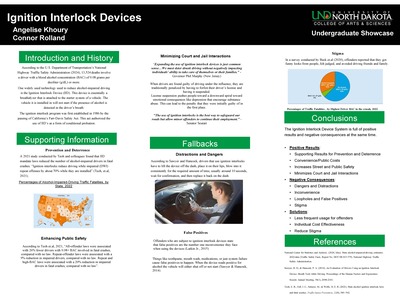
Ignition Interlock Devices: Do they really help?
Angelise Khoury and Connor Rolland
The United States has implemented a wide range of technologies and policies to reduce the amount of alcohol-impaired driving. Some of these include alcohol detection sensors in newer vehicles, ridesharing, DUI checkpoints, Secure Continuous Remote Alcohol Monitoring (SCRAM) bracelets, and more. One widely used technology used to reduce alcohol-impaired driving is the Ignition Interlock Device (IID). The IID is used in lieu of suspending one’s driver’s license after a DUI offense. IIDs are a widely implemented technology that we use today as a method of preventing driving under the influence of alcohol. Although they intend to ensure sober driving and to reduce DUI recidivism, IID’s also come with their own downsides...
-
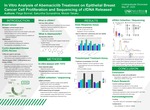
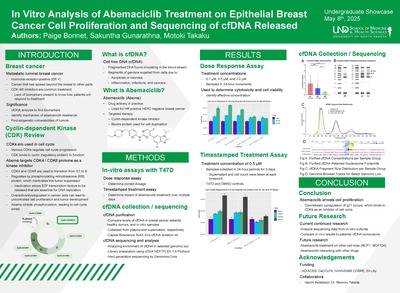
In Vitro Analysis of Abemaciclib Treatment on Epithelial Breast Cancer Cell Proliferation and Sequencing of cfDNA Released
Paige Bonnet, Sakuntha Gunarathna, and Motoki Takaku
Cyclin-dependent kinase 4 and 6 (CDK4/6) inhibitors, such as abemaciclib, are approved for hormone receptor–positive (HR+) breast cancer, where they inhibit tumor cell cycle progression. While their antiproliferative effects are established, less is known about how they may reflect molecular changes and using cfDNA as a biomarker of treatment response. This study aimed to evaluate the effect of abemaciclib on breast cancer cell proliferation in vitro and characterize cfDNA released during treatment using next-generation sequencing. Abemaciclib treatment significantly reduced cell proliferation in a dose-dependent manner. cfDNA release correlated with treatment intensity, and sequencing revealed upregulation of a gene in p21 pathway, which aides in cell cycle arrest. These findings suggest that abemaciclib arrests cells during cell cycle between G1 and S phase but also can be characterized through biomarkers in cfDNA released. This study supports the potential of cfDNA as a dynamic biomarker of treatment response in HR+ breast cancer. Ongoing analysis will further determine whether cfDNA features can reliably reflect therapeutic efficacy and resistance during CDK4/6 inhibitor therapy.
-
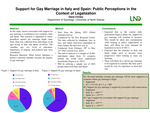
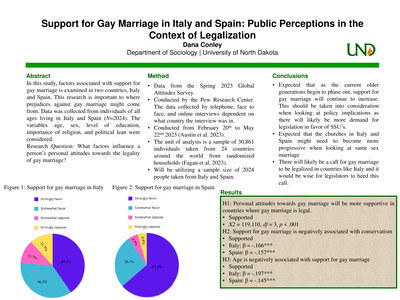
Support for Gay Marriage in Italy and Spain: Public Perceptions in the Context of Legalization
Dana Conley
In this paper factors that contribute to support for gay marriage are examined in two countries, Italy and Spain. Diffusion theory was applied to explore this idea. This research seeks to explore whether the legalization of gay marriage has an impact on the level of support for gay marriage in that country. Furthermore, this research is important to determine what factors contribute to shaping support for gay marriage. From there it may also be possible to identify where prejudices against gay marriage might come from. Personal attitudes towards support for gay marriage can vary due to a variety of factors. Data was collected from individuals of all ages living in Italy and Spain (N=2024). The variables of age, sex, level of education, importance of religion, and political lean were considered. It was found that age, sex, level of education, and importance of religion all had a significant relationship with level of support for gay marriage in both countries. Ultimately it was found that there was a higher percentage of people supporting gay marriage in Spain where gay marriage is legal than in Italy where gay marriage is not legal. Created in SOC 475: Sociology Capstone with Daphne Pedersen.
-

A Queer Take on Hell and the Hellmouth, Pre-Modern Era
Haley Brothers
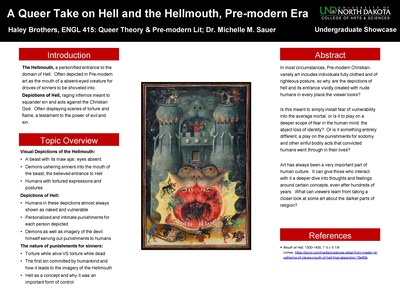
Taking a look at pre-modern depictions of hell and its entrance, the hellmouth, this presentation uses the imagery seen in these pieces to bring about a new perspective on how hell may have been seen back when it was first being drawn up. Through a queer lens, these concepts are explored to have a deeper meaning as it applies to gender equality through divine punishment, all as seen in art that was made to depict the concepts of hell and the hellmouth when they were made with such detail. This project explores the possibility of concepts born hundreds of years ago being used as a form of control for those who fear the blatant and indiscriminate equalization of genders.
-

The Grand Forks Business and Professional Women’s Club: A History of Women’s Empowerment
Emily Bruer
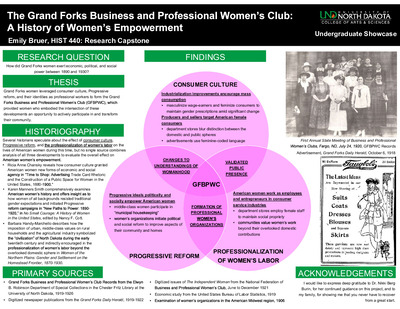
Members of the Grand Forks Business and Professional Women’s Club (GFBPWC) personified the intersection of consumer culture, Progressive reform, and the professionalization of women’s labor that occurred between 1890 and 1930. Their membership in the GFBPWC implied economic, political, and social empowerment and granted them an opportunity to actively participate in and transform their community. Not only were these professional women recognized as reputable, upstanding, and passionate members of their community, but they also saw themselves as agents of positive change and improvement within their own lives and for future generations. This study of the concurrent rise of consumer culture, Progressive reform, and the professionalization of women’s labor and the accompanying case study of the GFBPWC reveals the importance of identity and empowerment in the advancement and well-being of not only American women, but also their communities.
Related Document: The Grand Forks Business and Professional Women’s Club: A History of Women’s Empowerment Capstone Paper
-
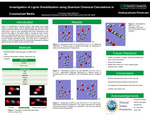
Investigation of Lignin Solubilization Using Quantum Chemical Calculations in Constrained Media
Leo Sanzone
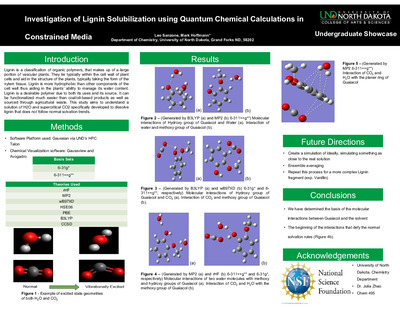
Lignin is a common, yet complex polymer found in a majority of vascular plants. The polymer can easily be functionalized, and it is a readily available and renewable source of carbon-based material without a petrol source. There are various methods to allow for the dissolution of lignin, one of which involves the use of H2O and CO2 in supercritical conditions. This particular solution bends the normal solvation rules and allows for multiple instances of H-bonding interactions.
By using Density Functional theory, this study aims to identify the molecular interactions of guaiacol (the most basic fragment of lignin) and a solution of H2O and CO2 at supercritical conditions. Said solution placing both molecules into an excited state, resulting in the warping of their base geometries and solvent interactions. By identifying these interactions we can then apply this knowledge to more advanced fragments of lignin, allowing us to fully understand this solvation.
Advisor: Mark Hoffmann
-
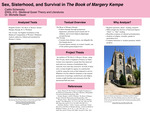
Sex, Sisterhood, and Survival in The Book of Margery Kempe
Caitlin Scheresky
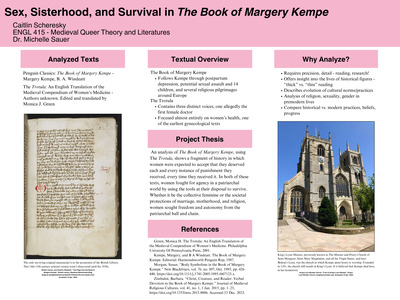
This presentation studies The Book of Margery Kempe, the first known English autobiography, through Kempe's position within a patriarchal society: Kempe's postpartum depression/psychosis, the repeated sexual assault at the hand of her husband, John, resulting in the conception of her fourteen children, her religiously mandated celibacy, and several religious pilgrimages across Europe. Such experiences were primarily under the wing of Kempe's religious rebirth as not only Jesus' wife but as a "spiritual mother" in the footsteps of the Virgin Mary, emphasizes Tara Williams in her article, "Manipulating Mary." Kempe's writings, as autobiography, are immediately groundwork for which Judith Butler's concepts of gender as a "stylized repetition of acts through time." These roles of religious wife and mother as performance uniquely position Kempe within the patriarchal world as a resistant commodity, both as a gendered body and a sexual object. Finding herself trapped in a male-dominated society with little—if any—bodily autonomy, Kempe attempts to break free of the patriarchal ball and chain, utilizing her celibacy, bodily and religious agency, and prioritized female sexual pleasure. An analysis of The Book of Margery Kempe shows a fragment of history in which women were expected to accept that they deserved each and every instance of punishment they received, every time they received it. In this text, women fought for agency in a patriarchal world by using the tools at their disposal to survive. Whether it be the collective feminine or the societal protections of marriage, motherhood, and religion, women sought freedom and autonomy from the patriarchal ball and chain, putting themselves at the center of their stories. Produced in English 415: Queer Theory and Pre-Modern Literatures with Dr. Michelle M. Sauer
-
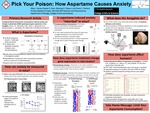
Pick Your Poison: How Aspartame Causes Anxiety
Abby J. Kersey, Baylee R. Kram, Blessing O. Okosun, and Diane C. Darland
BLUF: Limit your aspartame consumption!
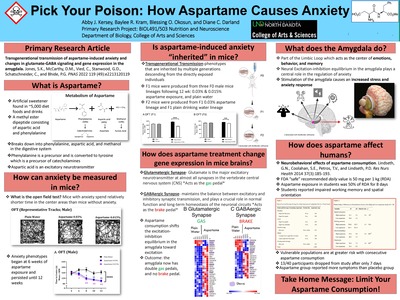
Studies have shown that consecutive aspartame consumption at as little as 7% of the FDA recommended daily intake can cause anxiety symptoms in ~8 days. Not only that, but after 12 weeks of consumption, it was proven that the anxiety symptoms are passed to the offspring two generations later. That means if you have roughly one to two 32 oz Diet Cokes per day, your children and grandchildren will show symptoms of anxiety even if they never consume aspartame themselves. It is important to note that aspartame is in many foods and products labeled as “diet” due to its zero calorie component. Please be aware of this and limit your aspartame consumption!
Primary research project for BIOL491/503 Nutrition and Neuroscience with Dr. Diane Darland.
-
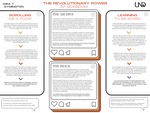
The Revolutionary Power of Boredom
Kira T. Symington
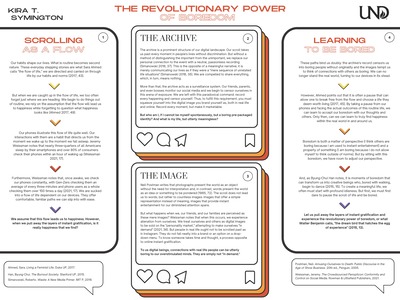
This philosophical presentation uses Sara Ahmed's writings on how our habits and routines make up the "flow of life to explore one of the most time-consuming habits that people take part in: our technology and social media usage. Analyzing this habit leads us to understand what future it orients us towards; that being the archive and the image. Using Roberto Simanoski's book "Waste," this analysis of the archive leads us to conclude that our media usage causes us to view life as without character and meaning and thus, as boring. Jeremy Weissman adds to this exploration of the archive, revealing that the censorship inherent in it also causes us to dull ourselves into acceptable modes of being and again, become boring. Turning to the analysis of the image, Neil Postman and Weissman show us that images present the world and others as flat and without character which causes us to perceive the world itself as boring and meaningless. Byung-Chul Han's work presents us with a possible solution: by disconnecting from the meaningless scroll of life as found in our devices, we can sit with our boredom and learn to perceive the world in new ways and thus recreate ourselves.
Conducted in Philosophy 331: Contemporary European Philosophy with Dr. Stone.
-

Sociopaths Have Formed Social Media
Alexandra Drews
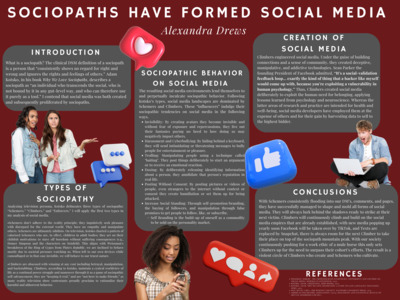
This philosophical analysis delves into the complex and interwoven dynamics between social media and two of Adam Kotsko's subcategories of Sociopathy, namely the "Climbers" and the "Schemers." By scrutinizing their motivations and behaviors within the realm of social media, this inquiry reveals the profound consequences that emerge from their actions. The "Climbers," driven by an insatiable desire for social status, exhibit a propensity for betraying others to achieve personal gain. Conversely, the "Schemers" engage in impulsive behaviors, prompted by an inherent need to alleviate boredom. Moreover, it becomes evident that the interplay between these subcategories has not only spawned a toxic cycle of social media usage. It has also witnessed the "Climbers" actively shaping and creating the technology, while the "Schemers" have cultivated and nurtured its underlying dynamics. Building upon this examination, it becomes evident that the interplay between these subcategories has spawned a toxic cycle of social media usage, perpetuated by the relentless quest for recognition and fueled by technological advancements. Recognizing and understanding this intricate cycle holds paramount importance in mitigating negative repercussions and fostering healthier interactions within the digital landscape. By unraveling the profound relationship between social media and Sociopathy, this analysis provides a philosophical lens through which one can comprehend the far-reaching implications of these phenomena, prompting critical reflection and necessitating proactive measures to navigate contemporary online interactions.
Conducted in Philosophy 331:Contemporary European Philosophy with Dr. Stone
The Arts & Sciences UNDergraduate Showcase gives undergraduate students the opportunity to showcase their research via posters and oral presentations. The posters included in the collection have been recognized for their quality and preserved for future use. Students and faculty interested in participating in future showcases can find more information on the UNDergraduate Showcase website.
Printing is not supported at the primary Gallery Thumbnail page. Please first navigate to a specific Image before printing.