

Files
Download Full Text (615 KB)
Description
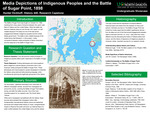
The Battle of Sugar Point generated a media frenzy that seemed greatly disproportionate for a battle of relatively little consequence. Newspapers ranging from tiny local papers to major nationally syndicated publications published headlines proclaiming that northern Minnesota was threatened by an all-out uprising of the Ojibwe, with large-scale violence sure to follow. Of course, no such uprising occurred. If one had, perhaps the Battle of Sugar Point would not exist in the relative obscurity that it does today. Why, then, was the press willing to stake such outlandish claims on next-to-no concrete evidence? Through my research, I argue that these inflammatory and exaggerated claims made by the newspapers stemmed from existing stereotypes about Native Americans, which often characterized them as primitive, violent, and inferior to whites. These stereotypes and misconceptions caused newspapers to describe the Ojibwe using racist and dehumanizing language, while simultaneously ignoring the legitimate grievances of the Ojibwe, which had been the true underlying cause that led to the outbreak of violence at Sugar Point.
Publication Date
5-22-2026
Document Type
Poster
City
Grand Forks, ND
Keywords
Indigenous History, Minnesota History, Media History, Ojibwe History
Disciplines
United States History
Recommended Citation
Eickhoff, Hunter, "Media Depictions of Indigenous Peoples and the Battle of Sugar Point, 1898" (2026). Arts & Sciences Undergraduate Showcase. 37.
https://commons.und.edu/as-showcase/37
Comments
Presented at the Spring 2026 Arts & Sciences UNDergraduate Showcase in Grand Forks, ND, May 7, 2026.
Faculty Mentor: Dr. Cynthia Prescott