

Files
Download Full Text (1.3 MB)
Description
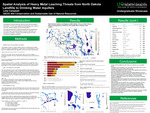
Groundwater is a primary fresh water source for most rural communities in North Dakota. The EPA acknowledges that landfill leakage is not a matter of if but when, and early detection can be extremely difficult. This project identifies which counties and aquifers face the greatest threat from landfill heavy-metal leaching based on proximity, waste types, and groundwater vulnerability, thereby indicating which landfills warrant the closest monitoring and regulatory compliance. The methodology combines two indexes. The DRASTIC index identifies aquifer vulnerability to surface pollution based on hydrogeologic factors. These factors are weighted by their significance to produce a score that reflects how easily contaminants migrate from the surface to the aquifer. The Landfill Water Pollution Index estimates heavy metal leaching potential by classifying waste types according to their estimated heavy metal concentration, toxicity, and drinking water standards. Both indexes are then combined into a composite risk score that evaluates how waste type and landfill proximity threaten each county's fresh water supply. The results identify which counties in North Dakota face the highest risk of heavy metal groundwater contamination, which aquifers are most vulnerable to leaching pollution, and which landfills should be following strict regulatory compliance. These findings highlight the need for stricter regulations and regular monitoring programs to protect vulnerable groundwater resources across North Dakota.
Publication Date
5-7-2026
Document Type
Poster
City
Grand Forks, ND
Keywords
Groundwater pollution, Landfills, Heavy Metals
Disciplines
Geography
Recommended Citation
Campbell, Leila, "Spatial Analysis of Heavy Metal Leaching Threats from North Dakota Landfills to Drinking Water Aquifers" (2026). Arts & Sciences Undergraduate Showcase. 34.
https://commons.und.edu/as-showcase/34
Comments
Presented at the Spring 2026 Arts & Sciences UNDergraduate Showcase in Grand Forks, ND, May 7, 2026.