


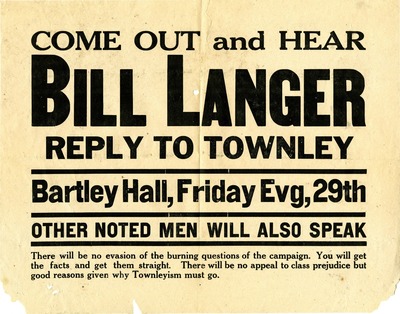
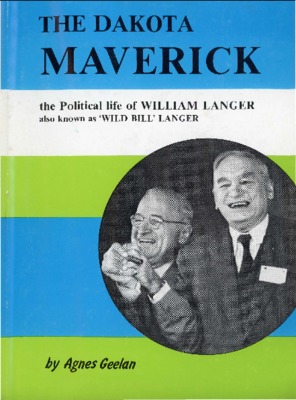
William Langer graduated from UND in 1906 and had a long career in politics. He was North Dakota Attorney General from 1917 until 1920 and served twice as Governor: from 1933 to 1934 and from 1937 until 1939. Elected to the United States Senate in 1941, he served until his death in 1959.
The digitization of these papers has been made possible in part by the National Endowment for the Humanities: Exploring the human endeavor. Any views, findings, conclusions, or recommendations expressed in this website, do not necessarily represent those of the National Endowment for the Humanities.
-
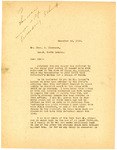
Letter from Assistant Attorney General Cox to Beach Police Magistrate Thor G. Plomasen Regarding the Ole Skrukrud Case, December 22, 1919
Cox Mr.
Letter dated December 22, 1919 from North Dakota (ND) Assistant Attorney General Edward Cox to Beach Police Magistrate Thor G. Plomasen in response to Plomasen's letter of December 18, 1919 to William Langer regarding the Ole Skrukrud Case. Cox writes that he has spoken with all parties and that Mr. Skrukrud will plead guilty and that Attorney Dawson will enter this plea with Judge Crawford soon. Cox also notes that he does not view any complaints about Dawson or his office are justified and that everyone is doing their jobs proficiently.
See also:
Letter from John F. Sullivan to Assistant Attorney General Cox Regarding the Ole Skrukrud Case, October 18, 1919
Letter from Assistant Attorney General Cox to John F. Sullivan Regarding the Ole Skrukrud Case, October 22, 1919
Letter from Beach Police Magistrate Thor G. Plomasen to Attorney General Langer Regarding the Ole Skrukrud Case, December 18, 1919
Letter from Attorney General Langer to Beach Police Magistrate Thor G. Plomasen Regarding the Ole Skrukrud Case, December 20, 1919
-
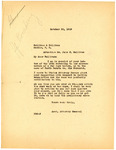
Letter from Assistant Attorney General Cox to John F. Sullivan Regarding the Ole Skrukrud Case, October 22, 1919
Cox Mr.
Letter, dated October 22, 1919 from North Dakota (ND) Assistant Attorney General Cox to Mandan Attorney John F. Sullivan in response to Sullivan's letter of October 18, 1919 regarding the Ole Skrukrud case. Cox writes that he has spoken to State's Attorney Dawson, and the latter is also fine with waiving the preliminary examination and that Sullivan and Cox can go over an outline of the case together in Bismarck in the next week to ten days.
See also:
Letter from John F. Sullivan to Assistant Attorney General Cox Regarding the Ole Skrukrud Case, October 18, 1919
Letter from Beach Police Magistrate Thor G. Plomasen to Attorney General Langer Regarding the Ole Skrukrud Case, December 18, 1919
Letter from Attorney General Langer to Beach Police Magistrate Thor G. Plomasen Regarding the Ole Skrukrud Case, December 20, 1919
Letter from Assistant Attorney General Cox to Beach Police Magistrate Thor G. Plomasen Regarding the Ole Skrukrud Case, December 22, 1919
-
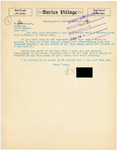
Letter from E. L. D** to Attorney General Langer Regarding State v. Stepp, April 16, 1919
E. L. D**
In this letter, dated April 16, 1919, from E. L. D**, father of the complainant in the State v. Stepp statutory rape case, to North Dakota Attorney General William Langer, D** refers to a letter he is enclosing from Devils Lake attorney Fred J. Traynor (misspelled here as "Trainor"). D** writes that if Langer would come and represent his daughter, D** would "drop all other special counsel."
See also:
Letter from G. Grimson to Attorney General Langer Regarding Initial Proceedings in Stepp Case, January 18, 1919
Statement of Ernest and Matilda D** Regarding Initial Proceedings in Stepp Case, February 10, 1919
Letter from Albert E. Sheets Jr. to Fred J. Traynor Regarding Motion to Dismiss Appeal in State v. Stepp, May 15, 1920
-
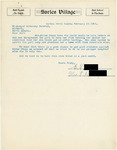
Letter from Mr. and Mrs. E. L. D** to Attorney General Langer Regarding Mrs. Hiram Stepp Threatening Their Pregnant Daughter, February 10, 1919
E. L. D** and Mrs. E. L. D**
In this letter, dated February 10, 1919, from Mr. and Mrs E. L. D** to North Dakota Attorney General William Langer Mr. and Mrs. D** report that Mrs. Hiram Stepp, knowing about the pregnancy of their daughter, threatened the daughter with "an awful beating" if she told her mother of her pregnancy, and wanted to "spirit" her away, promising her a home with them somewhere else.
Mr. and Mrs D** also make reference to the likelihood of getting "good evidence against Hiram Stepp on account of what he tried to do to to our younger daughter also who is only ten."
See also:
Letter from G. Grimson to Attorney General Langer Regarding Initial Proceedings in Stepp Case, January 18, 1919
Statement of Ernest and Matilda D** Regarding Initial Proceedings in Stepp Case, February 10, 1919
Letter from Sarles, ND Village Marshal Alvah Phillebaum to Attorney General Langer, February 10, 1919
Letter from L. F. Hinegardner to Attorney General Langer Accompanying Statement from Mr. and Mrs. D**, February 10, 1919
Letter from E. L. D** to Attorney General Langer Regarding State v. Stepp, April 16, 1919
-
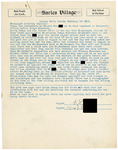
Statement of Ernest and Matilda D** Regarding Initial Proceedings in Stepp Case, February 10, 1919
Ernest D** and Matilda D**
This document, dated February 10, 1919, is described as "statements by Mr. and Mrs. D**" regarding the initial proceedings in the case against Hiram J. Stepp, whom the D**s accused of raping their daughter and fathering her child. It was sent to Attorney General Langer by Luther Frank Hinegardner - a blacksmith in Sarles, North Dakota, who had previously visited Langer in person about the Stepp case. The statement describes how F******* D** was put under oath in front of her mother Matilda D**, States Attorney Gudmundur Grimson, Director of the Fargo Children's Home F. R. Hinkle, Judge W. J. Kneeshaw, Larry Stepp, and his father R. E. Stepp. She was asked about her relationship with Larry Stepp, but not his uncle Hiram J. Stepp. Hinkle and Judge Kneeshaw advised the D**s to settle out of court. Hinkle produced the money for the financial settlement and gave it to Ernest D**. Larry Stepp was turned over to Mr. Folley, the juvenile probation officer. Hiram J. Stepp was brought in and the case against him was dismissed. F******* D** later stated that Hiram J. Stepp was the first man with whom she had intercourse at age 14.
See also:
Letter from G. Grimson to Attorney General Langer Regarding Initial Proceedings in Stepp Case, January 18, 1919
Letter From Mr. and Mrs. E. L. D** to Attorney General Langer Regarding Mrs. Hiram Stepp Threatening Their Pregnant Daughter, February 10, 1919
Letter from Sarles, ND Village Marshal Alvah Phillebaum to Attorney General Langer, February 10, 1919
Letter from L. F. Hinegardner to Attorney General Langer Accompanying Statement from Mr. and Mrs. D**, February 10, 1919
Letter from E. L. D** to Attorney General Langer Regarding State v. Stepp, April 16, 1919
-
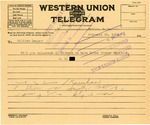
Telegram from G. A. D** to Attorney General Langer Asking to Have Hiram Stepp Detained, February 25, 1919
G. A. D**
In this telegram, dated February 25, 1919, from Sarles, North Dakota (ND) resident G.A. D** to ND Attorney General William Langer, D** asks Langer to telegraph Cavalier County, ND State's Attorney G. Grimson to have Hiram Steppe detained.
See also:
Letter from L. F. Hinegardner to Attorney General Langer regarding the Stepp Case, February 24, 1919
Telegram from Attorney General Langer to G. A. D** Regarding Stepp Case, February 25, 1919
-
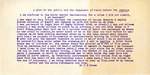
"A Plea to the Public and the Taxpayers of North Dakota for Justice" by Dr. T. H. Druen, Undated
T.H. Druen
In this undated statement, Dr. T. H. Druen, an inmate at the North Dakota State Penitentiary, claims he is innocent of the murder of his young daughter and is the subject of a conspiracy hatched by George Ryerson, States Attorney for Renville County. Druen further alleges that he did not receive a fair trial from Judge Alexander Burr.
See also:
Letter from P. B. Rognli to Attorney General Langer Regarding T. H. Druen, November 7, 1919
Letter from F. E. Packard for Attorney General Langer to P. B. Rognli Regarding T. H. Druen, November 10, 1919
Letter From Attorney General Langer to P. B. Rognli Regarding T. H. Druen, November 12, 1919
-
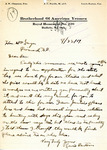
Letter from Lewis Easton to Attorney General Langer Regarding Tax on Movie Theaters, Laws Pertaining to Hunting with Dogs, August 22, 1919
Lewis Easton
In this letter, dated August 22, 1919, from Lewis Easton of Buffalo, North Dakota (ND), to ND Attorney General William Langer, Easton explains that he has contacted Langer's office requesting an application for paying state tax on his theater in Buffalo, but has heard nothing, so he is now contacting Langer personally to attend to the matter.
Easton adds that, as Justice of the Peace, he is often asked about about laws regarding hunting with dogs, and would like Langer to advise him on that as well.
See also:
Letter from Attorney General Langer to Lewis Easton Regarding Tax on Movie Theaters, August 23, 1919
-
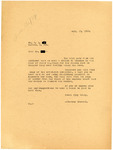
Letter from Attorney General Langer to E. L. D** Regarding Denial of Motion to Dismiss in State v. Stepp Case, September 23, 1919
Attorney General
In this letter, dated September 23, 1919, from North Dakota (ND) Attorney General William Langer to Ernest L. D**, Langer explains that his office filed a motion to dismiss the case of State v. Stepp because, "we thought they were fooling along too much." Langer refers to an attached copy of an affadavit, as well as a letter from a clerk of the ND Supreme Court indicating the dismissal motion had been denied. Langer writes that his office is doing everything it can to expedite the case.
See also:
Letter from Attorney General Langer to Hinegardner Regarding Motion to Dismiss in State v. Stepp Case, September 23, 1919
Letter from Attorney General Langer to S. L. Nuchols Regarding State v. Stepp Case, September 23, 1919
-
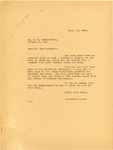
Letter from Attorney General Langer to Hinegardner Regarding Motion to Dismiss in State v. Stepp Case, September 23, 1919
Attorney General
In this letter, dated September 23, 1919, from North Dakota (ND) Attorney General William Langer to L. H. Hinegardner, of Sarles, ND, Langer explains that his office filed a motion to dismiss the case of State vs. Stepp because, he says, "we thought they were fooling along too much." Langer references an enclosed copy of the affidavit, and assures Hinegardner that his office is doing everything they can to expedite the case. He also makes reference to a letter from Clerk of Court, North Dakota Supreme Court, indicating that the dismissal motion was denied.
See also:
Letter from Attorney General Langer to E. L. D** Regarding Denial of Motion to Dismiss in State v. Stepp Case, September 23, 1919
Letter from Attorney General Langer to S. L. Nuchols Regarding State v. Stepp Case, September 23, 1919
-
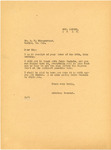
Letter from Attorney General Langer to L. F. Hinegardner Regarding State v. Stepp Case, October 2, 1919
Attorney General
In this letter, dated October 2, 1919, from North Dakota (ND) Attorney General William Langer to Sarles, ND resident L.F. Hinegardner, Langer acknowledges Hinegardner's letter of September 29, and pledges to contact S. L. Nuchols, and to do everything possible to get the State vs. Stepp case before the Supreme Court at the earliest date possible. He adds that he will ask Nuchols to contact him as well.
See also:
Letter from Attorney General Langer to Hinegardner Regarding Motion to Dismiss in State v. Stepp Case, September 23, 1919
-
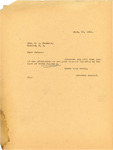
Letter from Attorney General Langer to S. L. Nuchols Regarding State v. Stepp Case, September 23, 1919
Attorney General
In this letter, dated September 23, 1919, from North Dakota (ND) Attorney General William Langer to Attorney S. L. Nuchols, Langer replies to a request from Nuchols for a copy of the affidavit in the case of State vs. Stepp. Langer writes that the affadavit is enclosed.
The affidavit references as enclosed was not found with this letter in Langer's papers.
See also:
Letter from Attorney General Langer to E. L. D** Regarding Denial of Motion to Dismiss in State v. Stepp Case, September 23, 1919
Letter from Attorney General Langer to Hinegardner Regarding Motion to Dismiss in State v. Stepp Case, December 23, 1919
-
Letter from Attorney General Langer to G. Grimson Regarding Stepp Case, February 25, 1919
Grimson
In this letter from North Dakota (ND) Attorney General William Langer to Cavalier County, ND State's Attorney G. Grimson, Langer refers to the case of Hiram Stepp, who was accused of statutory rape, writing that, given both Judge W. J. Kneeshaw's and Grimson's satisfaction with the way the case was handled, he knows of nothing he can do legally for plaintiffs Mrs. D** and her daughter, and views the case as terminated.
See also:
Telegram from G. A. D** to Attorney General Langer Asking to Have Hiram Stepp Detained, February 25, 1919
Letter from Attorney General Langer to G. Grimson Regarding Stepp Case, February 24, 1919
-
Letter from G. Grimson to Attorney General Langer Requesting New Warrant for Hiram Stepp, February 22, 1919
G. Grimson
In this letter, dated February 22, 1919, from Cavalier County, North Dakota (ND) States Attorney G. Grimson to ND Attorney General William Langer, Grimson refers to the case in which Hiram Stepp is accused of the statutory rape of F******* D**. Grimson writes that the D** family has now filed a written complaint with Justice Power and is asking for a new warrant to be issued for Stepp's arrest.
Grimson explains that Judge Kneeshaw has advised against a issuing a new warrant, and that Justice Power won't issue a warrant without authorization from Grimson or Langer. Grimson writes that he will go along with whatever Langer decides, and that, if Langer authorizes a new warrant, Langer or someone from his office should oversee the proceedings.
See also:
Letter from Attorney General Langer to W. J. Kneeshaw Regarding Complaints about Handling of State v. Stepp Case, February 14, 1919
Letter from Attorney General Langer to G. Grimson Regarding Stepp Case, February 24, 1919
-
Letter from G. Grimson to Attorney General Langer Regarding Initial Proceedings in Stepp Case, January 18, 1919
Gudmunder Grimson
In this letter, dated January 18, 1919, from States Attorney for Cavalier County, North Dakota (ND) Gudmundur Grimson to ND Attorney General William Langer, Grimson provides a chronological account of the steps he took upon hearing the D** family's accusation that Hiram J. Stepp of Sarles, North Dakota had raped and impregnated their teenage daughter F******* in February 1918. Grimson describes his initial interviews in December 1918 with the D**s, Stepp, and Stepp's nephew Larry who was also a person of interest in the alleged crime, as well as the events that led to Judge Kneeshaw's dismissal of the case against Hiram J. Stepp. Grimson also provides his opinion on the veracity of F******* D**'s account of the alleged crime, his suspicion that Hiram J. Stepp induced his nephew to alter his account of events to raise doubt about the paternity of D**'s infant, and his inkling about the role of local rivalries in the accusations against the elder Stepp. Grimson also asserts that, despite what Langer had been told by someone familiar with the case, he did not side-step his duty as States Attorney, but rather gave the case due diligence and believes the Judge made the right call in dismissing it.
See also:
Statement of Ernest and Matilda D** Regarding Initial Proceedings in Stepp Case, February 10, 1919
Letter From Attorney General Langer to W. J. Kneeshaw Regarding Complaints about Handling of State v. Stepp Case, February 14, 1919
Letter From Mr. and Mrs. E. L. D** to Attorney General Langer Regarding Mrs. Hiram Stepp Threatening Their Pregnant Daughter, February 10, 1919
Letter from Sarles, ND Village Marshal Alvah Phillebaum to Attorney General Langer, February 10, 1919
Letter from L. F. Hinegardner to Attorney General Langer Accompanying Statement from Mr. and Mrs. D**, February 10, 1919
-
Memo from Caleb S. Haines to Attorney General Langer Regarding the Carl Maier Case, September 16, 1919
Caleb S. Haines
Memo from Caleb.S. Haines to North Dakota (ND) Attorney General William Langer Regarding the Carl Maier Case.
In it, Haines reports his findings from his interview with Anna Bortvet in Estherville, Iowa on September 16, 1919. He writes that Bortvet, a nurse, had previously cared for Maier two years prior to his death, when he was suffering from rheumatism, and that since then she had gone riding with him several times and that they had "kept company."
Bortvet strongly believed that Maier was murdered and did not commit suicide. She told Haines that the nurse who had cared for Maier immediately after the shooting, before Bortvet had taken over his care, told her that Maier had said that he was attacked by a man with a black hat and dark complexion.
Bortvet told Haines she suspected that Russie White, who lived within a mile of Maier, had killed Maier by mistake and that Maier's brother John had been the intended target. Bortvet based this belief on information she was given by a teenage boy who worked for White.
See also:
Letter from Attorney General Langer to John Albers Regarding the Carl Maier Case, September 29, 1919
Copy With Handwritten Notes of Memo from Caleb S. Haines to Attorney General Langer Regarding the Carl Maier Case, September 16, 1919
Letter from Attorney General Langer to Anna Bortvet regarding the Carl Maier Case, October 13, 1919
-
Copy With Handwritten Notes of Memo from Caleb S. Haines to Attorney General Langer Regarding the Carl Maier Case, September 16, 1919
C.S. Haines
This is a copy of a memo from Caleb S. Haines to North Dakota Attorney General William Langer Regarding the Carl Maier Case. This copy is identical to the original, except that it also contains three pages of handwritten notes from Haines's interview with Anna Bortvet. These notes contain shorthand versions of the information found in the memo itself.
See also:
Letter from Attorney General Langer to John Albers Regarding the Carl Maier Case, September 29, 1919
Memo from Caleb S. Haines to Attorney General Langer Regarding the Carl Maier Case, September 16, 1919
Letter from Attorney General Langer to Anna Bortvet regarding the Carl Maier Case, October 13, 1919
-
Letter from L. F. Hinegardner to Attorney General Langer Accompanying Statement from Mr. and Mrs. D**, February 10, 1919
L. F. Hinegardner
In this letter, dated February 10, 1919, from L. F. Hinegardner of Sarles, North Dakota (ND) to ND Attorney General William Langer, Hinegardner refers to an enclosed statement he took from Mr. and Mrs. D**'. He says he is also sending Ms. D**'s report card from her professor to explain why she was at a disadvantage. Hinegardner also asks for a copy of what Langer had from Mr. Grimson when Hinegardner was there.
The statement referred to as enclosed is not included here, but is linked below.
See also:
Letter from G. Grimson to Attorney General Langer Regarding Initial Proceedings in Stepp Case, January 18, 1919
Statement of Ernest and Matilda D** Regarding Initial Proceedings in Stepp Case, February 10, 1919
Letter From Mr. and Mrs. E. L. D** to Attorney General Langer Regarding Mrs. Hiram Stepp Threatening Their Pregnant Daughter, February 10, 1919
Letter from Sarles, ND Village Marshal Alvah Phillebaum to Attorney General Langer, February 10, 1919
-
Letter from L. F. Hinegardner to Attorney General Langer regarding the Stepp Case, February 24, 1919
L. F. Hinegardner
In this letter, dated February 24, 1919 from L. F. Hinegardner of Sarles, North Dakota (ND) to ND Attorney General William Langer, Hinegardner refers to the case in which Hiram Stepp was accused of the statutory rape of F******* D**, which Hinegardner feels was handled improperly. Hinegardner expresses impatience as he waits for promised information from Langer, saying it looks as though Langer has "laid down on the job." He also claims that Langer has shared information with other parties that he told Hinegardner he would not share. Hinegardner concludes that he hopes to receive the promised "big letter" written by Grimson by return mail.
See also:
Letter from G. Grimson to Attorney General Langer Regarding Initial Proceedings in Stepp Case, January 18, 1919
Letter from Attorney General Langer to L. F. Hinegardner Regarding Acquisition of Legal Transcript, February 14, 1919
Letter From Attorney General Langer to W. J. Kneeshaw Regarding Complaints about Handling of State v. Stepp Case, February 14, 1919
Letter from Attorney General Langer to W. J. Kneeshaw Regarding Complaints about Handling of State v. Stepp Case, February 14, 1919
Letter from Attorney General Langer to G. Grimson Regarding Stepp Case, February 24, 1919
-
Letter from Albert Janssen Regarding Arrest and Guilty Plea, January 21, 1919
Albert Janssen
In this handwritten letter, datd January 21, 1919, from Albert Janssen, a prisoner in Mandan, to North Dakota Attorney General William Langer Janssen notes his legal situation and writes that he only had liquor in order to fight the flu. He asks if Langer might be able to get him released from jail early to tend to crops on his 375 acre farm.
See also:
Letter from Attorney General Langer to Albert Janssen Regarding Arrest and Guilty Plea, January 27, 1919
-
Copy of Letter from Emmet County, Iowa Attorney F. J. Kennedy to Attorney General Langer Regarding the Death of Carl Maier, January 2, 1919
F. J. Kennedy
This is a copy of letter from Emmet County, Iowa Attorney F. J. Kennedy to North Dakota Attorney General William Langer Regarding the Death of Carl Maier, January 2, 1919. While it contains the original text, it is on different letterhead, with different margins than the original.
See also:
Letter from Emmet County, Iowa Attorney F. J. Kennedy to Attorney General Langer Regarding the Death of Carl Maier, January 2, 1919
Letter from Attorney General Langer to Emmet Country, Iowa Attorney F. J. Kennedy Regarding the Death of Carl Maier, January 6, 1919
-
Letter from Emmet County, Iowa Attorney F. J. Kennedy to Attorney General Langer Regarding the Death of Carl Maier, January 2, 1919
F. J. Kennedy
Letter from Emmet County, Iowa Attorney F. J. Kennedy to North Dakota Attorney General William Langer regarding the death of Carl Maier, January 2, 1919. Kennedy suggests that Maier may have been killed in a case of mistaken identity by a man named Russie White who was intending to shoot Carl Maier's brother, John over a matter involving White's young wife.
Anna Bortvet, the nurse who cared for Maier after he was shot, related this information to Kennedy. Bortvet got this information from her sister who was living in Maier's neighborhood at the time of the shooting and was told some of these suspicions by a boy named Fred Lang who worked for Mr. White.
See also:
Copy of Letter from Emmet County, Iowa Attorney F. J. Kennedy to Attorney General Langer Regarding the Death of Carl Maier, January 2, 1919
Letter from Attorney General Langer to Emmet Country, Iowa Attorney F. J. Kennedy Regarding the Death of Carl Maier, January 6, 1919
-
Instructions for Pool Hall Inspectors, 1919
William Langer
Letter from Attorney General William Langer to State Pool Hall Inspector Earle Tostevin regarding reports from his office, dated September 17, 1919.
-
Letter from Attorney General Langer to Albert Janssen Regarding Arrest and Guilty Plea, January 27, 1919
William Langer
In this letter, dated January 27, 1919, from North Dakota Attorney General William Langer to Albert Janssen, imprisoned in Mandan, Langer replies to Janssen's letter of January 21, noting that he has no jurisdiction in Janssen's case, as it is in Federal Court.
-
Letter from Attorney General Langer to Anna Bortvet regarding the Carl Maier Case, October 13, 1919
William Langer
Letter dated October 13, 1919 from North Dakota Attorney General William Langer to Anna Bortvet (misspelled in this letter as "Bortret") regarding the Carl Maier (misspelled as "Meier") case. Langer writes that he has received Bortvet's earlier letter about living with the Johnsons and tells her that she has done everything she can. Langer requests that she return to Bismarck and meet with him.
Memo from Caleb S. Haines to Attorney General Langer Regarding the Carl Maier Case, September 16, 1919
Copy With Handwritten Notes of Memo from Caleb S. Haines to Attorney General Langer Regarding the Carl Maier Case, September 16, 1919