



































-
A Secular Age
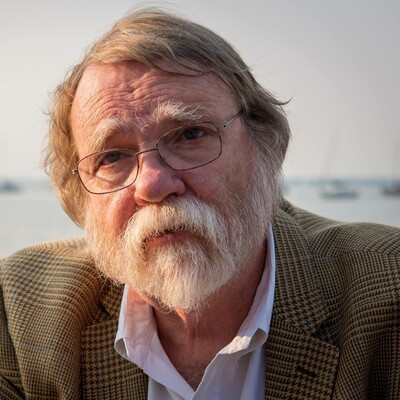
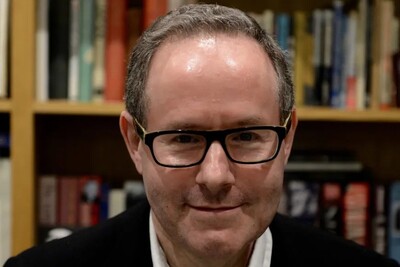
Jack Russell Weinstein and Charles Taylor
Even the most religious of people understand that their belief is only one option of many; a different attitude than those who lived 500 years ago when theological commitments were so automatic as to not be questioned. What caused this radical cultural shift? This is the question Charles Taylor seeks to answer in his new book A Secular Age. In doing so, he asks about the nature of religion, the meaning of secularism, and the history of how much of the world shifted from the former approach to the latter. Join WHY? as we ask about this innovative and important topic, and connect it to Taylor’s long career of influential philosophical study.
WHY?’s host Jack Russell Weinstein says,” I’m overwhelmed by the opportunity to talk with Charles Taylor. His work has been so important to me, but even more so, a conversations with him, early in my career, helped focus my thoughts for a decade or more. I can say with confidence that not only is he a kind and accessible person, but he is also one of the smartest people I have had the good fortune to meet and learn from.”
Charles Taylor is one of the most important and influential philosophers alive today. His 1992 book Sources of the Self continues to impact a great deal of contemporary philosophy, sociology, anthropology, and other disciplines. Taylor is Professor Emeritus at McGill University, a recipient of the prestigious Templeton Prize, the author of more than a dozen books, and countless scholarly articles.
-

The Profession of Philosophy Redux
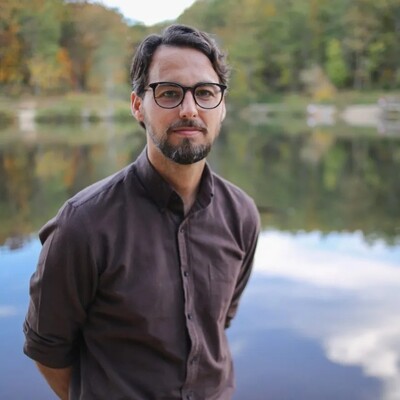
Jack Russell Weinstein and Brian Leiter
Brian Leiter joined Why? in April but technical difficulties prevented us have having anything but a short conversation. In this episode, he generously returns to try again.
What is the difference between a philosopher and a philosophy professor? What does the world think a philosopher is and how does this square with the philosopher’s own self-image? The next episode of Why? looks closely at the philosopher’s job, exploring both the perennial question of its relevance and the tremendously competitive hiring process that almost every professional philosopher must endure. Join guest Brian Leiter for an insider’s look at the profession of philosophy, and a discussion about the future of the discipline: where is philosophy now, how has it changed, and how will it evolve over the next decades?Brian Leiter founded the University of Chicago Law School’s Center for Law, Philosophy, and Human Values when he joined their faculty in July 2008. His teaching and research interests are in philosophy of law, moral and political philosophy, and Continental philosophy. Most pertinently, he is the gatekeeper to philosophy’s official unofficial rankings, maintaining “The Philosophical Gourmet” an annually updated list of the most prestigious graduate programs. He also maintains three blogs, one on Nietzsche, one on law school, and “The Leiter Reports,” a compendium of professional news, issues in the profession, and news clippings related to philosophy as a discipline and as a career. His scholarly books include Objectivity in Law and Morals, Nietzsche on Morality, The Future for Philosophy, Naturalizing Jurisprudence: Essays on American Legal Realism and Naturalism in Legal Philosophy, and The Oxford Handbook of Continental Philosophy. Leiter holds an AB from Princeton University, and a JD and PhD in philosophy from University of Michigan, Ann Arbor.
Why?’s host Jack Russell Weinstein says, “Obviously, the profession of philosophy is always on my mind, but what happens when we explore it philosophically? What do we learn by turning the philosophical lens on ourselves? I’m excited to have Brian here to ask some of the most basic questions of all: how do philosophers make their money and are they of use to anyone at all.”
-

Domestic Violence and the Law: China vs. the U.S.A.
Jack Russell Weinstein and Robin Runge
In March of 2010, Robin Runge traveled to Beijing to train Chinese judges to better deal with issues of domestic violence in the law; this was her second such visit. In comparing the Chinese and American systems, she has able to see those areas in which American law better responds to the needs of the community and those areas in which the Chinese system does. In this episode of Why? we will discuss her experiences and address central questions in the philosophy of law. What counts as evidence? How ought the court deal with a he said/she said situation? In what ways can judges work with the police to promote better investigations? How do cultural differences affect legal frameworks, and to what extent is domestic violence a violation of human rights?
Robin R. Runge is an Assistant Professor of Law at the University of North Dakota School of Law where she teaches in the Employment and Housing Law Clinic. Professor Runge taught public interest lawyering and domestic violence law at The George Washington University Law School, and domestic violence law at The American University Washington College of Law. From 2003 to 2009, Professor Runge was Director of the Commission on Domestic Violence at the American Bar Association where she managed all aspects of Commission programming including developing training curricula for attorneys, writing articles and speaking domestically and internationally on various aspects of domestic violence and the legal response to domestic violence including the employment rights of domestic violence victims. Previously, Professor Runge was Deputy Director and Coordinator of the Program on Women’s Employment Rights (POWER) at the D.C. Employment Justice Center and the Coordinator of the Domestic Violence and Employment Project at the Employment Law Center, Legal Aid Society of San Francisco.
Why‘s host Jack Russell Weinstein says, “trying to discuss domestic violence philosophically is a real challenge, as is comparing legality and morality. Having Robin on the show helps us take a fresh look at a complex and difficult subject – a subject that needs much more attention.”
*View the link below to see a video of Hyeon-Ju the ABA’s Rule of Law Country Director for China (until July 2011). She is talking about all of the work of the Beijing office including the judicial training Robin helped with in March 2010.
http://www.youtube.com/user/abaruleoflaw#p/a/u/0/IDDpT5MtkHs -
Exporting Democracy Revisited: A Report From Romania
Jack Russell Weinstein and Paul E. Sum
Last year, Paul Sum joined us to talk about the possibilities of exporting the American model of democracy to other countries. He was about to embark on a one-year trip to Romania to examine their transition to democracy. Now he’s back and ready to share what he learned. Join us for a conversation about what democracy looks like in Eastern Europe now, at this very moment, and how the reality compares to our hopes and theories.
Paul Sum is an Associate Professor of Political Science at the University of North Dakota. His interests were shaped through his experience during an earlier trip to Romania as a Visiting Scholar and Fellow at Babeş-Bolyai University in Cluj (1996-1998). He has worked with the Bureau of Educational and Cultural Affairs in the U.S. Department of State (formerly the U.S. Information Agency), the Council of Europe, the OSCE, the U.S. Agency for International Development, the National Democratic Institute for International Affairs, Democracy International, and the International Research & Exchanges Board. His work includes monitoring elections and campaigns, assessing pre and post-election voter surveys, and evaluating the impact of various democracy assistance programs in Albania, Bulgaria, Kosovo, and Romania among other locations. He remains on staff as a Visiting Professor at Babeş-Bolyai University in Romania and has taught at Tulane University and Northwestern University. He is particularly interested in the background and motivations of civil society activists in the post-communist world. He has been widely published, but work in this specific area have appeared in East European Politics & Societies and the Romanian Journal of Science and Politics. He is currently completing an edited volume for Lexington Books titled Romania under Basescu.
Why?’s host Jack Russell Weinstein says “Paul Sum has a great mind, and I can think of no better guide to the philosophy of democracy as it exists in Eastern Europe. I’m anxious to learn how American values and ideals transfer to other countries and what America, in turn, can learn from others. It’s always a pleasure to have Paul on the show.”
-

Eric Sevareid and the Philosophy of Journalism
Jack Russell Weinstein and Clay Jenkinson
What constitutes serious journalism? Can a reporter be a philosopher? How did broadcast journalism change the philosophy behind news reporting? These are just some of the questions that come to mind when one thinks about the life and work of Eric Sevareid. Born in Velva, North Dakota, Sevareid was one of America’s most influential broadcast journalists. One of “Murrow’s Boys” – named as such because of his extensive work with the legendary Edward R. Murrow – his reports on World War II captivated America. On this episode of Why?, Clay Jenkinson returns to examine Sevareid’s legacy and the ways in which journalism has changed since then. Discussing his current documentary project on the legendary reporter and Sevareid’s autobiography Not So Wild A Dream, Jenkinson will explore the impact journalism has on the world around us and ways in which autobiography reveals how one person, at least, crafted and pursued his personal mission.
The episode also celebrates the new “philosophy issue” of North Dakota Humanities Council’s magazine On Second Thought. Click here download a copy. Or, click here to read it online.
A cultural commentator who has devoted most of his professional career to public humanities programs, Clay Jenkinson is the host of public radio’s The Thomas Jefferson Hour. He has been honored by two United States presidents for his work. On November 6, 1989, he received one of the first five Charles Frankel Prizes, the National Endowment for the Humanities’ highest award (now called the National Humanities Medal), at the nomination of the NEH Chair, Lynne Cheney. Since his first work with the North Dakota Humanities Council in the late 1970s, including a pioneering first-person interpretation of Meriwether Lewis, Clay Jenkinson has made thousands of presentations throughout the United States and its territories, including Guam and the Northern Marianas. He is also the author of numerous books.
Why?’s host Jack Russell Weinstein says, “Sevareid is a romantic figure who builds his sense of self on an idealized North Dakota childhood. These days, Clay Jenkinson is probably America’s most recognized North Dakota romantic. I can therefore think of no better person to channel Sevareid and no more appropriate mind to explore these issues with. I’m thrilled for Clay’s return to the show and for the opportunity to once again examine how the lives of North Dakotans reveal the larger human experience.”
-

Empathy, the Constitution, and Sexual Orientation
Jack Russell Weinstein and Martha Craven Nussbaum
Should America allow gay marriage? Are demands for civil rights by homosexuals analogous to earlier movements for equality by black Americans, women, and others? How have personal attitudes – particularly disgust – shaped law in the United States? This episode of Why? will focus on the enlarging sphere of respect that American culture is cultivating for all of its members, as well as the role the humanities play in articulating political rights. Join us for a discussion about constitutional interpretation regarding same-sex relations, and the role that the ethical and sympathetic imagination plays in recognizing the humanity of others.
Martha Nussbaum is one of the most distinguished and important philosophers living today. She is the Ernst Freund Distinguished Service Professor of Law and Ethics at the University of Chicago, appointed in the Philosophy Department, Law School and Divinity School. She is an Associate in the Classics Department and the Political Science Department, a Member of the Committee on Southern Asian Studies, and a Board Member of the Human Rights Program. She is the founder and Coordinator of the Center for Comparative Constitutionalism. She received her BA from NYU and her MA and PhD from Harvard, and has taught at Harvard, Brown, and Oxford Universities.
Her publications include Aristotle’s De Motu Animalium (1978),The Fragility of Goodness: Luck and Ethics in Greek Tragedy and Philosophy (1986, updated edition 2000), Love’s Knowledge (1990), The Therapy of Desire (1994), Poetic Justice (1996), For Love of Country (1996), Cultivating Humanity: A Classical Defense of Reform in Liberal Education(1997), Sex and Social Justice (1998), Women and Human Development (2000), Upheavals of Thought: The Intelligence of Emotions (2001), Hiding From Humanity: Disgust, Shame, and the Law (2004), Frontiers of Justice: Disability, Nationality, Species Membership (2006), The Clash Within: Democracy, Religious Violence, and India’s Future (2007), and Liberty of Conscience: In Defense of America’s Tradition of Religious Equality (2008). From Disgust to Humanity: Sexual Orientation and Constitutional Law will be published in February 2010. She has also edited thirteen books. Her Supreme Court Foreword, “Constitutions and Capabilities,” appeared in 2007 and will ultimately become a book to be published by Harvard. Her current work in progress includes: Not For Profit: Liberal Education and Democratic Citizenship (Princeton); The Cosmopolitan Tradition (Harvard); Creating Capabilities: The Human Development Approach (Harvard); and Compassion and Capabilities (Cambridge).
Why?’s host Jack Russell Weinstein explains “Martha Nussbaum’s work has been both a tremendous influence professionally and an immeasurable inspiration personally. If there’s something I want to write about, in virtually every instance, she’s been there first. At the same time, she’s accessible, interesting, and concerned with reaching out to the general public. I’m tremendously excited to have her on the show – if time permitted, I would interview her for hours.”
-

The Profession of Philosophy
Jack Russell Weinstein and Brian Leiter
Plagued with technical difficulties, the first two thirds of this episode features host Jack Russell Weinstein offering his thoughts on the topic, responding to internet questions, and meditating on his own experiences as a philosophy professor. Brian Leiter appears for a brief discussion towards the end; we hope to have him on again and apologize to him and to listeners who were looking forward to the extended discussion.
What is the difference between a philosopher and a philosophy professor? What does the world think a philosopher is and how does this square with the philosopher’s own self image? The next episode of Why?looks closely at the philosopher’s job, exploring both the perennial question of its relevance and the tremendously competitive hiring process that almost every professional philosopher must endure. Join guest Brian Leiter for an insider’s look at the profession of philosophy, and a discussion about the future of the discipline: where is philosophy now, how has it changed, and how will it evolve over the next decades?
Brian Leiter founded the University of Chicago Law School’s Center for Law, Philosophy, and Human Values when he joined their faculty in July 2008. His teaching and research interests are in philosophy of law, moral and political philosophy, and Continental philosophy. Most pertinently, he is the gatekeeper to philosophy’s official unofficial rankings, maintaining “The Philosophical Gourmet” an annually updated list of the most prestigious graduate programs. He also maintains three blogs, one on Nietzsche, one on law school, and “The Leiter Reports,” a compendium of professional news, issues in the profeson, and news clippings related to philosophy as a discipline and as a career. His scholarly books include Objectivity in Law and Morals, Nietzsche on Morality, The Future for Philosophy, Naturalizing Jurisprudence: Essays on American Legal Realism and Naturalism in Legal Philosophy, and The Oxford Handbook of Continental Philosophy. Leiter holds an AB from Princeton University, and a JD and PhD in philosophy from University of Michigan, Ann Arbor.
Why?’s host Jack Russell Weinstein says, “Obviously, the profession of philosophy is always on my mind, but what happens when we explore it philosophically? What do we learn by turning the philosophical lens on ourselves? I’m excited to have Brian here to ask some of the most basic questions of all: how do philosophers make their money and are they of use to anyone at all.”
-

The Humanities in America: The Case for Public Funding
Jack Russell Weinstein and Brenna Daugherty
What are the humanities and why are they important? How can the National Endowment for the Humanities claim that their activities are “critical to our common civic life as a nation?” And most controversially, should the U.S. government fund such cultural endeavors? In this episode of Why? we examine the philosophical issues related to what has come to be called the public humanities: the effort of both private and governmental organizations to create and supports events that disseminate philosophy, history, literature, and other arts to the general public.
A North Dakota native, Brenna Daugherty is currently the executive director of the North Dakota Humanities Council, the state affiliate of the National Endowment for the Humanities. She received a master’s degree in Theological Studies from the Harvard Divinity School in June 2005. Brenna has been awarded the Prudential Spirit of Community Award Bronze medal, a STAND Leader Americorp Education Award, and the Concordia College Servant Leadership Award for her work with early intervention for college attendance. At Concordia, her undergraduate alma mater, she was a founding member of TOCAR, a tri-college anti-racism initiative, and while at Harvard she was a founding member of Equitas, a social justice think tank.
Why?’s host Jack Russell Weinstein says, “I can think of no single person who is more intrinsic to the dissemination of the humanities in North Dakota. It is exciting to get the chance to talk theory with Brenna. Why should the community support what she does? Why are the humanities key to the development of citizenship? This discussion is going to be more controversial than one might otherwise think.”
-

Ideology and Curriculum: 30 Years of a Discussion
Jack Russell Weinstein and Michael W. Apple
What political and economic forces affect teachers as they write their lesson plans? How does socialization create the kind of education we give our children? Why isn’t school politically neutral? In our next episode of Why? we will ask these questions and more, focusing on Michal Apple’s influential book Ideology and Curriculum. For thirty years, the book has challenge educators, directed policy conversations, and inspired those who want to think differently about schools and their roles in a democracy.
Professor Michael W. Apple is John Bascom Professor of Curriculum and Instruction and Educational Policy Studies at the University of Wisconsin, Madison. He teaches courses in curriculum theory and research and in the sociology of curriculum. His major interests lie in the relationship between culture and power in education. He has many influential publications including the books,Ideology and Curriculum, The State and Politics of Education. Educating the “Right” Way: Markets, Standards, God and Inequality, Official Knowledge: Democratic Knowledge in a Conservative Age; Cultural Politics and Education;Education and Power.
Why?’s host Jack Russell Weinstein says, “This book helped me better understand what it means to be a teacher and what I bring to my classroom. I’m very excited to talk with Michael and further challenge my understanding of what education is. I’m hoping that school teachers, parents, and anyone who has an interest in what happens in our schools will call or write in, making this a lively and unpredictable discussion.
-

Fiction as Philosophy
Jack Russell Weinstein and Rebecca Goldstein
Philosophy tries to discover Truth, but more often than not it tells stories, relying on allegories, parables, and dialogues at key moments. What happens when a professional philosopher decides to embrace this method, and how does it affect the philosophy at the core of the story? Join WHY? as we interview Rebecca Goldstein, author of such novels as 36 Arguments for the Existence of God, The Mind-Body Problem, Mazel, and Strange Attractors. How do truth and fiction relate? How does one move back and forth from scholarly research to popular fiction, and, most of all, how does fiction relate to discovery?
Rebecca Goldstein has taught at Barnard and Trinity Colleges, and Rutgers, Columbia, Brandeis, and Harvard University. She is the author of numerous scholarly articles, two non-fiction books on Gödel and Spinoza, seven novels, and numerous short stories. She has been a MacArthur Fellow.
Why’s host Jack Russell Weinstein says, “I am tremendously impressed by how Rebecca straddles the literary and philosophical world. I think few philosophers today have her capacity to go so deep into the rabbit hole, and I’m anxiously awaiting the opportunity to go in there with her.”
-

On Self-Deception
Jack Russell Weinstein and Amelie Rorty
Amelie Rorty tells us that self-deception is useful, yet this belief runs counter to much that we hold dear. What of truth and integrity? What of self-knowledge? These question lie at the core of a wide-ranging discussion about who we are, how we relate to the world around us, and our relationship with knowledge. Join Why? for a discussion that helps distinguish self-deception from delusion, ambivalence from skepticism, and how we actually live from how we think we do.
Amelie Rorty is a visiting professor at Boston University and is an honorary lecturer in the Department of Global Health and Social Medicine, at the Harvard School of Medicine. Her teaching career includes posts at Rutgers University, Mount Holyoke College, Harvard Graduate School of Education, and at Brandeis University, where she was professor of the history of ideas from 1995 to 2003. She is the author of Mind In Action (1988), and the editor of numerous books on the concepts of identity and emotion as well as influential studies on Descartes and Aristotle.
-
What is Critical Thinking?
Jack Russell Weinstein and Harvey Siegel
Is it ever possible to actually persuade anybody? How do we best critically analyze our own opinions? Is human rationality really that which lies at our decision making process? Is there a right answer and how do modern diversity considerations interfere with arguments seeking the Truth? These questions mark only the beginning of discussions regarding critical thinking and the role of informal logic in people’s day to day life. Join Harvey Siegel for a discussion on how people think, whether thinking skills can actually be improved, and coping with relativism in an argument.
Harvey Siegel is Professor of Philosophy and Chair of the Department of Philosophy at the University of Miami. He was educated at Cornell University and Harvard University. His research interests are in the areas of philosophy of science, epistemology, and philosophy of education. He is especially interested in issues concerning rationality and relativism. He has published over 100 articles both in philosophy and education journals, and has published three books:Relativism Refuted: A Critique of Contemporary Epistemological Relativism,Educating Reason: Rationality, Critical Thinking, and Education, and Rationality Redeemed? Further Dialogues on an Educational Ideal. He is the editor of Reason and Education: Essays in Honor of Israel Scheffler. He is past President of both the Philosophy of Education Society and the Association for the Philosophy of Education.
Why?’s host Jack Russell Weinstein says, “This radio show presumes the possibility of critical thinking. Its guests also hope to persuade. Our conversation with Harvey will not only force us to come to terms with the nature of human thought but also the hopes and aspirations for this show. Harvey is a thoughtful philosopher of education with his finger on the pulse of a core issue in the human experience. How can we educate if we don’t teach people to think better?”
-

The Disappeared: Human Rights and Art
Jack Russell Weinstein, Sarah Cahill, Christian Correa, Father Jack Davis, and Emmanuel Jal
Five years ago, the North Dakota Museum of Art hosted a panel on art and human rights in order to commemorate their exhibit The Disappeared. We thought the recording was lost forever, but we found it, cleaned it up, and presenting it here.
The Disappeared is an exploration of victims of political violence in Latin America. It’s a chilling exhibit that got worldwide attention, including a review in The New York TimesT. The panel was an opportunity to explore the same themes with musicians and activists who know about violence first hand. My guests on the panel are pianist Sarah Cahill, Christian Correa, Father Jack Davis, and hip-hop musician and author, Emmanuel Jal.
Biographies of the panelists can be found here.
The Disappeared: exhibition website.
The New York Times review of the exhibition.
Thank you to the North Dakota Museum of Art for hosting the panel and for inviting WHY? to participate.
-

The Other Economics: Welfare, Development, and Justice
Jack Russell Weinstein and Amartya Sen
It is easy to think that all economists believe the free market solves every problem and that government assistance is a detriment to distributive justice. Nobel Prize winning economist and philosopher Amartya Sen argues otherwise. His groundbreaking work on famine, human capabilities, gender equality, and justice are found at the core of “development economics.” In this episode of Why?, Sen will discuss all these issues and their connection to philosophy. How are human capabilities related to democracy? Why is famine a political problem rather than simply one of food supply? How does all of this stem from a misunderstanding of Adam Smith and the connections between morality and commercial structures? Join Amartya Sen for an exciting and timely discussion about justice and the economic structures that help bring it to everyone in the world.
Amartya Sen won the Nobel Prize in Economics in 1998 for his work on welfare economics. His autobiographical statement can be found here. He is Lamont University Professor, and Professor of Economics and Philosophy, at Harvard University and was until recently the Master of Trinity College, Cambridge. He has served as President of the Econometric Society, the Indian Economic Association, the American Economic Association and the International Economic Association. Amartya books have been translated into more than thirty languages, and include Collective Choice and Social Welfare (1970), On Economic Inequality (1973, 1997), Poverty and Famines (1981), Choice, Welfare and Measurement (1982), Resources, Values and Development(1984), On Ethics and Economics (1987), The Standard of Living (1987), Inequality Reexamined (1992), Development as Freedom (1999), and Rationality and Freedom (2002), The Argumentative Indian (2005), and Identity and Violence: The Illusion of Destiny (2006), among others. In addition to being a Nobel Laureate, Amartya has been awarded the “Bharat Ratna” (the highest honour awarded by the President of India); the Senator Giovanni Agnelli International Prize in Ethics; the Alan Shawn Feinstein World Hunger Award; the Edinburgh Medal; the Brazilian Ordem do Merito Cientifico (Grã-Cruz); the Presidency of the Italian Republic Medal; the Eisenhower Medal; Honorary Companion of Honour (U.K.); and The George C. Marshall Award.
Why’s host Jack Russell Weinstein explains, “to have Amartya Sen on this program is a dream come true. Not only because he is such a renown figure but because the work he has done is so important for so many people. Few people marry the theoretical life of philosophy with the practical consequences of real-world economic analysis as well as he does. Furthermore, as an Adam Smith scholar myself, I am ecstatic at the idea of talking with someone who has such a holistic view of the connections between morality and economic justice.”
-

The Morality (and Legality) of Universal Healthcare
Jack Russell Weinstein and Sharona Hoffman
Very few issues are more on the American mind than health care right now. But what are the philosophical issues behind the politics? Does the state have a moral obligation to provide health care to others? Do citizens have the duty to pay for it? And given that the constitution is silent on the question of health care, what is the relationship between legality and morality? Sharona Hoffman will join us to ask these and other timely questions for what is bound to be a controversial but exciting show.
Sharona Hoffman is a Professor of Law and Bioethics and Co-Director of the Law-Medicine Center. She received her J.D. from Harvard Law School and an LL.M. in health law from the University of Houston.
In 2007, Sharona spent four months as a guest researcher at the Centers for Disease Control and Prevention (CDC) working on liability and immunity issues related to public health emergencies. She has also been appointed by the U.S. Secretary of Health and Human Services to serve as a member of the Board of Scientific Counselors for CDC’s Coordinating Office for Terrorism Preparedness and Emergency Response during 2008-2012. She has published over forty articles, most of which focus on health law and civil rights law. Her research interests include disability discrimination, biomedical research, health care coverage, race and medicine, health information technology, and emergency preparedness.
Why?’s host Jack Russell Weinstein says, “This is an issue that goes to the heart of what we need not only for America but for the modern world, and there is no one better to discuss it with than someone who has legs in both the legal and medical worlds. I’m tremendously excited to have someone as interesting as Sharona to talk with.”
Sharona visited Why? Radio a second time, in 2016, for a conversation called “How to Think Philosophically About Aging.” You can listen to that here.
-

Justice, Caring, and the Mentally Disabled
Jack Russell Weinstein and Eva Feder Kittay
Modern political philosophy has argued that justice requires full equality for those who can both carry the burdens and get the benefits from participating in social cooperation. But what about those who cannot fulfill these obligations because of limited mental capacities? Are these people still due justice, and if so, what sort of equality could we expect to grant them? In other words, what do we owe to those among us who are not capable of participating in society in typical ways because of their cognitive limitations? These and other questions will focus the discussion with Eva Kittay, author of the highly influential book Love’s Labor: Essays on Women, Equality, and Dependency. Does justice presuppose participation, and what happens when we shift the obligation from duty to caring for others? This discussion will get to the core of what we believe we owe others and what it means to live in a society where difference means more than just religious, ethnic, or political difference. It goes to the heart of what it means to be human in society.
Eva Feder Kittay is a Professor of Philosophy at State University of New York, Stony Brook. She has authored and edited numerous books on a range of topics, with an emphasis on feminism, political thought, and disability studies. She is a Senior Fellow at the Center for Medical Humanities, Compassionate Care, and Bioethics at Stony Brook. Her forthcoming book Cognitive Disability and Its Challenge to Moral Philosophy continues many of the themes of her earlier work including emphasizing the way in which traditional philosophy have passed over the concerns of a large spectrum of humanity.
WHY?’s host Jack Russell Weinstein remarks, “Having Eva Kittay on the show is tremendously exciting. Reading Love’s Labor changed my own work forever and forced me to look at the world — and at justice — in an entirely different way. This is a discussion that will tear at your heart while challenging you intellectually.”
-

Literature in the Digital Age
Jack Russell Weinstein and Crystal Alberts
Is a book on the web still a book? Do hyperlinks change the role of narrative? What is an author if anyone can publish anything whenever they want? These questions frame Why?’s first episode in front of a live audience. Recorded at the newly renovated opera house in New Rockford, North Dakota, guest Crystal Alberts will crack open “philosophy of literature” to help us investigate our assumptions about reading, writing, and art in general. An expert in “new media,” we will take the opportunity to ask her the kinds of questions that come up all-too-often in today’s computerized world. What does interactivity do to the experience of reading? How does the urgency of “hipness” compare with the time-tested lessons of the classics? What does the world “classic” mean anyway? Is the feel of paper on your fingers a necessary component of good reading?
Dr. Crystal Alberts holds a Ph.D. in English and American Literature from Washington University in St. Louis. She specializes in post-1945 American literature and culture, particularly on the roles of the archive and author in contemporary writing. She currently teaches in the areas of film, digital humanities, and new or emerging media. Dr. Alberts is the co-editor of a forthcoming volume entitled Novel in Tradition: Essays on William Gaddis. She also has articles in The Missouri Review, as well as Paper Empire: William Gaddis and the World System edited by Joseph Tabbi and Rone Shavers. She serves as the technical editor for the NEH-funded Elizabeth Barrett Browning Project and is a research associate for the Electronic Literature Organization.
WHY?’s host Jack Weinstein says, “Crystal is representative of the energy and learning that our newer scholars bring with them out of graduate school. She is more aware of the cutting edge than most people I know, and talking with her will be a challenge to my own assumptions, not just the listeners’. This will be a lively, exciting, and interactive episode.”
-
Exporting Democracy
Jack Russell Weinstein and Paul E. Sum
“Democracy assistance” has become ever more important to U.S. foreign policy since the end of the Cold War. Its goal is to help usher in or encourage democratic practices amongst the world. But these attempts raise many philosophical questions including whether it is possible to “export” democracy at all. Paul E. Sum is a political scientist whose research explores the effectiveness of such democracy assistance programs in the post-communist world. In late July, he will travel to Romania for one year to investigate that country’s transition to democracy. With this episode of WHY?, we will catch up with him before he goes and ask a range of preliminary but related questions: What is a democracy? What conditions are necessary for a transition to this form of government? What method most effectively delivers democracy assistance? And, what has the track record of the US attempt to foster democracy been so far? We hope, when he returns, to revisit these questions and discover what new information he can provide about the process of democratization in Romania and around the world.
Paul Sum is an Associate Professor of Political Science at the University of North Dakota. His interests were shaped through his experience during an earlier trip to Romania as a Visiting Scholar and Fellow at Babeş-Bolyai University in Cluj (1996-1998). He has worked with the Bureau of Educational and Cultural Affairs in the U.S. Department of State (formerly the U.S. Information Agency), the Council of Europe, the OSCE, the U.S. Agency for International Development, the National Democratic Institute for International Affairs, Democracy International, and the International Research & Exchanges Board. His work includes monitoring elections and campaigns, assessing pre and post-election voter surveys, and evaluating the impact of various democracy assistance programs in Albania, Bulgaria, Kosovo, and Romania among other locations. He remains on staff as a Visiting Professor at Babeş-Bolyai University in Romania and has taught at Tulane University and Northwestern University. He is particularly interested in the background and motivations of civil society activists in the post-communist world. He has been widely published, but work in this specific area have appeared in East European Politics & Societies and the Romanian Journal of Science and Politics.
Why?’s host Jack Weinstein says, “Paul is one of those people who teaches you new facts about the world every time you engage him in conversation. His ability to understand the practicalities of democratic behavior has opened up, to me, an entirely new understanding as to how and why politics operates as it does. We are truly fortunate to get to talk with him on the eve of a whole new project, and to share with him the power of the unknown — the excitement of the unanswered question.”
-

America’s So-Called Decline
Jack Russell Weinstein and Mark Stephen Jendrysik
Today’s pundits and politicians love to tell us that America is in decline. Michael Moore, Bill O’Reilly, Patrick Buchanan, Bill Clinton, and even philosophers like Allan Bloom and Noam Chomsky work to persuade us that America has lost its way. But this message is nothing new. From the earliest moments of North American settlement people have been preaching American downfall, yet this “jeremiad” – the use of the theme of downfall named after the biblical Book of Jeremiah – “does not invite discussion. It is not designed to create debate. It preaches to the converted, or at best draws in those who have not considered the issues before and are ready to be converted.” So writes Mark Jendrysik, author of the book Modern Jeremiahs: Contemporary Visions of American Decline.”
On this episode of WHY? we will talk about the political uses of jeremiad and ask whether it contributes to truth and citizen-participation, and we will investigate its role in manipulation and fear-mongering. Why is this negativity so popular and why does Jendrysik believe that civilizations need Jeremiahs, even if people rarely heed them? Is jeremiad anti-philosophical?
Mark Stephen Jendrysik is Associate Professor and Chair of the Department of Political Science and Public Administration at the University of North Dakota. He has published and presented papers on early modern political thought, public opinion methodology, ethnic politics in the United States, utopian political theory, and contemporary American political thought. He is also the author of Explaining the English Revolution: Hobbes and His Contemporaries.
Why?’s host Jack Russell Weinstein says “this issue is tremendously important as North Dakota is itself awash in modern jeremiahs. Even our own Senator Byron Dorgan’s books Take This Job and Ship It and Reckless are variations on the theme of American decline. Mark’s astute and wry analyses of the American political system never fail to engage his audience, and his unique voice is both engrossing and entertaining.”
-
Competition, Society, and the Athlete
Jack Russell Weinstein and Paul Gaffney
What is the meaning of athletic competition and how should we understand its prominence in our society? Is victory the chief criterion of success or are other values significant? Does it play a moral role in our society? Can it teach us something? Is competition beautiful? Can we justify the enormous investments made in our professional and amateur sporting enterprises? What precisely is the satisfaction gained by athletic achievement?
Paul Gaffney regards athletic competition as a basic but positive type of human relationship. It is neither a friendship nor an instance of enmity: competitors do not seek each other’s “good” as friends do, but they do not wish to destroy the other. They are not enemies. What they seek – what competitors need each other for – may not be available except through competition. Therefore, a certain paradox emerges: a competitor does everything he or she can, within the rules of the encounter, to frustrate the efforts of the other, yet he or she needs the other to respond to the challenge and give the competition its meaning and worth. This suggests that the athletic engagement, far from being just a preparation for, or a reflection of “real” world struggles, is actually an activity that we need to make sense of an increasingly human, honest, and meaningful society.
Paul Gaffney is Associate Professor and Chair of the Philosophy Department at St. John’s University, NY, and Adjunct Professor of Business Administration at John Cabot University in Rome, Italy. In 1997 he was named St. John’s College of Liberal Arts Professor of the Year by Student Government. He has published many articles and reviews on topics such as Ethics, Law, Education, and Sport. A former college basketball player at Niagara University, he is currently working on a book entitled The Competition Ideal: The Structure and Meaning of Antagonistic Relationships.
-

On Forgiveness
Jack Russell Weinstein and Charles L. Griswold
What is forgiveness? Why and when should we forgive? Does forgiving run counter to justice? Is forgiveness purely a religious concept? How does it connect to philosophical conceptions of duty and community? These questions direct the Easter Sunday episode of Why? with a special emphasis on how a philosopher’s research leads him or her to new and related topics.
Charles L. Griswold, Jr. is a historian of philosophy whose research has spanned the history of philosophy itself. Originally a scholar of ancient philosophy, Griswold made his reputation with an exploration of Plato’s account of self-knowledge. He continued this theme of self-examination through an investigation of the moral theories of enlightenment philosopher Adam Smith, a thinker who recognized that in order to know oneself, one has to understand and internalize the perspectives of others. Forgiveness is the next step of this journey. Join Griswold as he connects ancient accounts of what it means to forgive with the most modern accounts of political recognition and the place of apology in this most contemporary of issues.
Charles L. Griswold, Jr. is Professor of Philosophy at Boston University and the former chair of his department. He has taught at Howard University, and held visiting appointments at the Université de Paris-Panthéon-Sorbonne, Yale University, and Georgetown University. In 1995, he won the Outstanding Teaching Award from the Boston University Honors Program of the College of Arts and Sciences. His most recent book Forgiveness: A Philosophical Exploration has attracted the attention of some of the most notable minds in moral debate today, including Ellie Wiesel who writes, “Rarely has a philosopher offered his fervent students and readers such depth, knowledge and sensitivity as Charles Griswold has done in this volume that deals with one of the most urgent topics facing humankind today.”
Read Charles’s article from the New York Times by clicking here: http://opinionator.blogs.nytimes.com/2010/12/26/on-forgiveness/
-
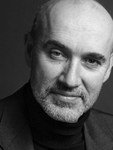
Philosophy of Hunting
Jack Russell Weinstein and Lawrence E. Cahoone
What happens when a philosopher raised outside of a culture that promotes hunting takes up the sport? What philosophical lessons can he learn from the experience and how can he describe them in existential terms? Lawrence Cahoone asks these questions and more. Growing up in the urban and suburban Northeast, he had no experience of hunting. But in middle-age, after moving to a rural area, he decided that if he was going to eat meat he ought to find some himself. It seemed only fair. So, he began to hunt. But as a philosophy professor, he was forced to reflect on the experience in a very particular way. Was it moral to shoot animals? What does it feel like to seek and to kill? What was involved in entering the “wild on wild” business? Philosophers have debated whether hunting is a violation of animal rights, a friend to the environment, or a sport. But what Larry ended up asking was something more basic. In the end, he wanted to know: what does hunting mean?
To read Larry’s paper “Hunting as a Moral Good,” click here.
Lawrence Cahoone is an Associate Professor at Holy Cross College. He received his Ph.D. from the State University of New York at Stony Brook. He is the author and editor of multiple books, most recently Cultural Revolutions: Reason versus Culture in Contemporary Philosophy, Politics, and Jihad (Penn State, 2005).
-
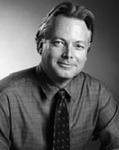
The Philosopher and the Humanist
Jack Russell Weinstein and Clay Jenkinson
What is the purpose of philosophy? What is the place of the humanities in day-to-day life? How can asking “why” contribute to the lives of North Dakotans, Americans, and people around the world? These questions direct the discussion of Why’s very first episode featuring renowned humanities scholar Clay Jenkinson.
Jenkinson, who is most famous for portraying Thomas Jefferson in the long-running and always inspiring public radio show The Thomas Jefferson Hour, is one of the most sought-after humanities scholars in the United States.
A cultural commentator who has devoted most of his professional career to public humanities programs, Clay Jenkinson has been honored by two presidents for his work. On November 6, 1989, he received from President George Bush one of the first five Charles Frankel Prizes, the National Endowment for the Humanities’ highest award (now called the National Humanities Medal), at the nomination of the NEH Chair, Lynne Cheney. On April 11, 1994, he was the first public humanities scholar to present a program at a White House-sponsored event, when he presented Thomas Jefferson for a gathering hosted by President and Mrs. Clinton. When award-winning humanities documentary producer Ken Burns turned his attention to Thomas Jefferson, he asked Clay Jenkinson to be the major humanities commentator. Since his first work with the North Dakota Humanities Council in the late 1970s, including a pioneering first-person interpretation of Meriwether Lewis, Clay Jenkinson has made thousands of presentations throughout the United States and its territories, including Guam and the Northern Marianas.
Airing since 2009, Why? Radio is a philosophical podcast hosted by Professor Jack Russell Weinstein. It aims to show that all philosophy is relevant to our day-to-day lives and that everyone is doing philosophy all the time, we just don’t know it. This collection archives all episodes from its inception to the present day.
Printing is not supported at the primary Gallery Thumbnail page. Please first navigate to a specific Image before printing.