




-
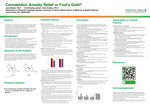
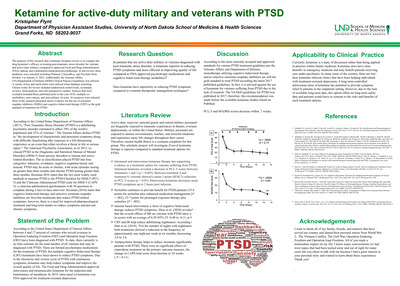
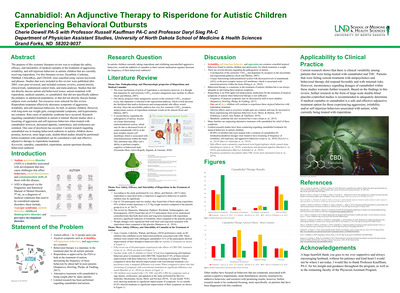
Cannabidiol: Anxiety Relief or Fool’s Gold?
Jase Bakker
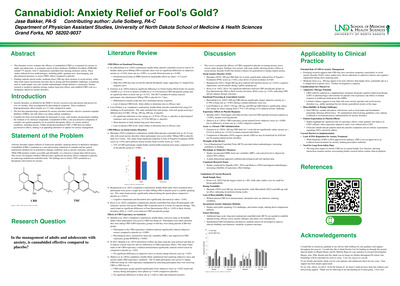
This literature review evaluates the efficacy of cannabidiol (CBD) as a treatment for anxiety in adults and adolescents. A systematic search of three databases (PubMed, PsychInfo, EMBASE) yielded 775 articles, with 11 randomized controlled trials meeting inclusion criteria. These studies utilized diverse methodologies, including public speaking tests, neuroimaging, and physiological measures, to assess CBD's effects compared to placebo. • Findings indicate mixed results: moderate doses (300 mg) show promise in social anxiety, while other trials report inconsistent outcomes due to dosing and bioavailability challenges. Limitations such as small sample sizes and variable methodologies hinder definitive conclusions. Further research is needed to optimize dosing, explore long-term effects, and establish CBD's role as a therapeutic option for anxiety disorders.
-
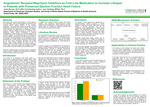
Angiotensin Receptor/Neprilysin Inhibitors as First-Line Medication to Increase Lifespan in Patients with Preserved Ejection Fraction Heart Failure
Josie Benzie
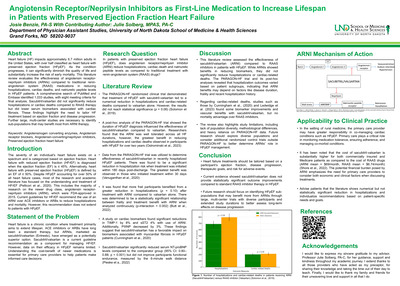
the United States, with over half classified as heart failure with preserved ejection fraction (HFpEF). As the condition progresses, it can significantly diminish the quality of life and substantially increase the risk of early mortality. This literature review evaluates the effectiveness of angiotensin receptorneprilysin inhibitors (ARNIs) compared to traditional reninangiotensin system (RAAS) medications in reducing hospitalizations, cardiac deaths, and natriuretic peptide levels in HFpEF patients. A comprehensive search of PubMed and Embase identified 1,033 studies, with eight meeting criteria for final analysis. Sacubitril/valsartan did not significantly reduce hospitalizations or cardiac deaths compared to RAAS therapy but did lower serum biomarkers associated with cardiac fibrosis. These findings highlight the need to tailor HF treatment based on ejection fraction and disease progression. Further large, multi-center studies are necessary to identify sub-populations that may benefit most from ARNI therapy.
-
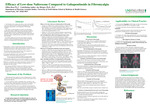
Efficacy of Low-dose Naltrexone Compared to Gabapentinoids in Fibromyalgia
Dillon Boen
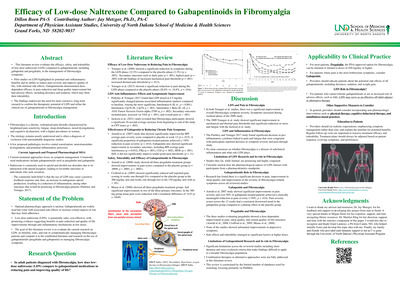
• . This literature review evaluates the efficacy, safety, and tolerability of low-dose naltrexone (LDN) compared to gabapentinoids, including gabapentin and pregabalin, in the management of fibromyalgia symptoms. • Pilot studies on LDN highlighted its potential anti-inflammatory benefits and its ability to reduce pain severity and improve quality of life, with minimal side effects. Gabapentinoids demonstrated dose-dependent efficacy in pain reduction and sleep quality improvement but had adverse effects, including dizziness and sedation, which may limit their tolerability. • The findings underscore the need for more extensive, long-term research to confirm the therapeutic potential of LDN and refine the clinical use of gabapentinoids in fibromyalgia management.
-
Monoclonal Antibody Therapy Versus Oral Immunotherapy in Food Allergies
Kendra Bohm
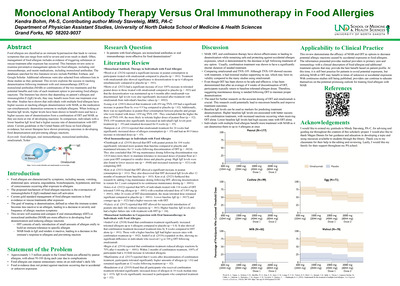
Food allergies are classified as an immune hyperreaction that leads to various symptoms that can range from mild to severe and even result in death. Often, management of food allergies includes avoidance of triggering substances or rescue treatment after exposure has occurred. This literature review aims to examine preventative management options for food allergies, including oral immunotherapy, and recent medications, including monoclonal antibodies. The databases searched for this literature review include PubMed, Embase, and Google Scholar. Additional references were also selected from reference lists in those studies as they pertained. This review explores the success in reaching desensitization following treatment with oral immunotherapy (OIT) or monoclonal antibodies (MAB) or combinations of the two treatments and the potential benefits and risks of each treatment option in preventing food allergic reactions. The literature has shown that depending on patient’s allergies and immunoglobin E (IgE) levels, they may benefit more from one treatment over the other. Studies have shown that individuals with multiple food allergies have higher success at reaching allergen desensitization with MAB, as the medication can simultaneously desensitize someone to multiple allergens. When looking at baseline IgE levels, higher levels have been shown to benefit more and have a higher success rate of desensitization from a combination of OIT and MAB, as they are more at risk of developing reactions. In comparison, individuals with a lower baseline IgE level had a higher success rate of desensitization with OIT alone. Current guidelines in the United States still focus on food allergen avoidance, but newer therapies have shown promising outcomes in developing food desensitization and preventing allergic reactions.
-
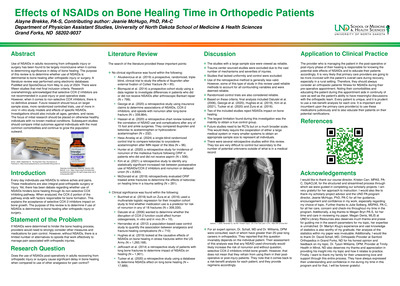
Effects of NSAIDs on Bone Healing Time in Orthopedic Patients
Alayne Brekke
Use of NSAIDs in adults recovering from orthopedic injury or surgery has been found to be largely inconclusive when it comes to determining significance in delay of bone healing. The purpose of this review is to determine whether use of NSAIDs is detrimental to bone healing after orthopedic injury or surgery. A literature review was performed using electronic databases PubMed and SportsDiscus from May to July of 2024. There were fifteen studies that met final inclusion criteria. Research overwhelmingly acknowledged that selective COX-2 inhibitors are not recommended in a post injury or post operative state. However, when it comes to non-selective COX inhibitors, there is no definitive answer. Future research should focus on larger sample sizes, more randomized controlled trials, use of more in vivo/ in vitro study models and effects of specific NSAIDs. Investigations should also include all ages, genders, and races. The focus of initial research should be placed on otherwise healthy individuals with no known medical conditions. Subsequent studies should compare initial outcomes against individuals with the most common comorbidities and continue to grow the population outward
-

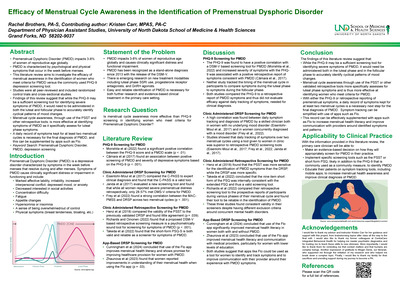
Efficacy of Menstrual Cycle Awareness in the Identification of Premenstrual Dysphoric Disorder
Rachel Brothers
Premenstrual Dysphoric Disorder (PMDD) impacts 3-8% of women of reproductive age globally. • PMDD is characterized by psychological and physical symptoms that occur in the week before menses. • This literature review aims to investigate the efficacy of menstrual awareness in the identification of women who meet criteria for PMDD versus the commonly used PHQ-9 depression screening tool. • Studies were all peer-reviewed and included randomized control trials and cross-sectional studies. • Findings of this review suggest that while the PHQ-9 may be a sufficient screening tool for identifying severe symptoms of PMDD, it would need to be administered in both the luteal and follicular phase to accurately identify cyclical patterns of mood changes. • Menstrual cycle awareness, through use of the PSST and other retrospective tools, is more effective at identifying symptoms of PMDD as it specifically assess for luteal phase symptoms. • A daily record of symptoms kept for at least two menstrual cycles is necessary for the final diagnosis of PMDD, and this can be supplemented by apps such as Flo.
-
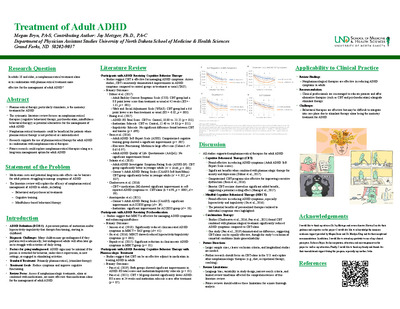
Treatment of Adult ADHD
Megan Bryn
Pharmaceutical therapy, particularly stimulants, is the mainstay treatment for ADHD • The systematic literature review focuses on nonpharmaceutical therapies (cognitive behavioral therapy, psychoeducation, mindfulness behavioral therapy) as potential alternatives for the management of adult ADHD • Nonpharmaceutical treatments could be beneficial for patients where pharmaceutical therapy is not preferred or contraindicated • Research supports the use of pharmaceutical therapy for adult ADHD in combination with nonpharmaceutical therapies • Future research could explore nonpharmaceutical therapies along as a long-term management option for adult ADHD
-
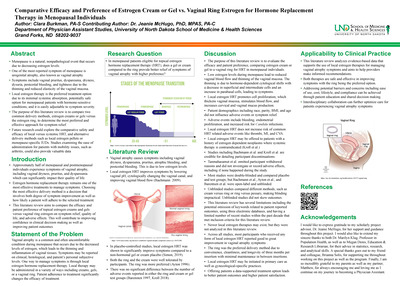
Comparative Efficacy and Preference of Estrogen Cream or Gel vs. Vaginal Ring Estrogen for Hormone Replacement Therapy in Menopausal Individuals
Clara Burkman
• Menopause is a natural, nonpathological event that occurs due to decreasing estrogen levels. • One of the most reported symptom of menopause is urogenital atrophy, also known as vaginal atrophy. • Symptoms include vaginal pruritus, dyspareunia, dryness, dysuria, postcoital bleeding, and tightness due to the thinning and reduced elasticity of the vaginal mucosa. • Local estrogen therapy is the preferred treatment option due to its minimal systemic absorption, potentially safe option for menopausal patients with hormone-sensitive conditions, and it is easily adjustable to symptom severity. • The purpose of this literature review is to compare two common delivery methods, estrogen creams or gels versus the estrogen ring, to determine the most preferred and effective approach for symptom relief. • Future research could explore the comparative safety and efficacy of local versus systemic HRT, and alternative delivery methods such as local estrogen pellets or menopause-specific IUDs. Studies examining the ease of administration for patients with mobility issues, such as arthritis, could also provide valuable data
-
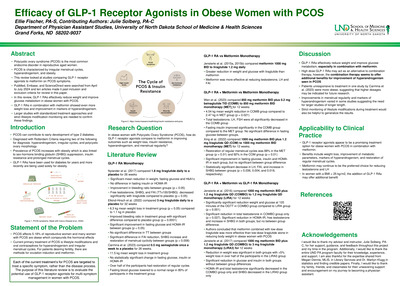
Efficacy of GLP-1 Receptor Agonists in Obese Women with PCOS
Ellie Fischer
• Polycystic ovary syndrome (PCOS) is the most common endocrine disorder in reproductive aged women. • PCOS is characterized by irregular menstrual cycles, hyperandrogenism, and obesity. • This review looked at studies comparing GLP-1 receptor agonists to metformin on PCOS symptoms. • PubMed, Embase, and ScienceDirect were searched from April to July 2024 and ten articles made it past inclusion and exclusion criteria for review in this paper. • In this review, GLP-1 RAs effectively reduce weight and improve glucose metabolism in obese women with PCOS. • GLP-1 RAs in combination with metformin showed even more weight loss and improvement in markers of hyperandrogenism. • Larger studies with standardized treatment approaches and strict lifestyle modification monitoring are needed to confirm these findings.
-
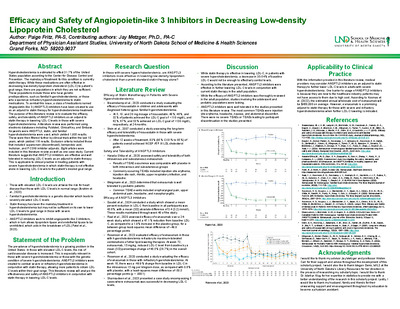
Efficacy and Safety of Angiopoietin-like 3 Inhibitors in Decreasing Low-density Lipoprotein Cholesterol
Paige Fritz
Hypercholesterolemia is estimated to effect 31.7% of the United States population according to the Center for Disease Control and Prevention. The mainstay of treatment for this condition is currently statin therapy. While these medications are often effective in decreasing low-density lipoprotein cholesterol (LDL-C) to patient’s goal range, there are populations in which they are not sufficient. These populations include those who have genetic predispositions, such as familial hypercholesterolemia, or those who experience refractory hypercholesterolemia to statin medications. To combat this issue, a class of medications named Angiopoietin-like 3 (ANGPTL3) inhibitors have been created to use as an adjunct to statin therapy for hypercholesterolemia treatment. The purpose of this literature review is to evaluate the efficacy, safety, and tolerability of ANGPTL3 inhibitors as an adjunct to statin therapy in lowering LDL-C levels in those with severe hypercholesterolemia. A literature review was performed using electronic databases including PubMed, ClinicalKey, and Embase. Keywords were ANGPTL3, statin, and familial hypercholesterolemia were used, which yielded 1,935 results. These were then filtered further by clinical trials within the last 10 years, which yielded 116 results. Exclusion criteria included those that included vupanorsen (discontinued), bempedoic acid, Inclisiran, and PCSK9 inhibitor adjuncts. Eight articles were included in this literature review as well as one case study. Current literature suggests that ANGPTL3 inhibitors are effective and well tolerated in reducing LDL-C levels as an adjunct to statin therapy. This is applicable to clinical practice in treating patients with severe hypercholesterolemia in which statin therapy is not effective alone in lowering LDL-C levels to the patient’s desired goal range.
-

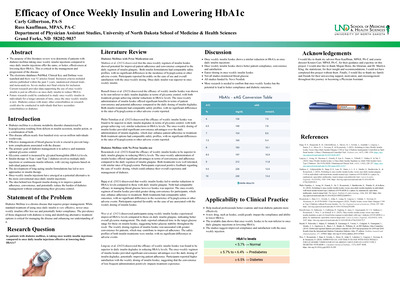
Efficacy of Once Weekly Insulin and Lowering HbA1cCarly
Carly Gilbertson
• The purpose of this literature review is to determine if patients with diabetes mellitus taking once weekly insulin injections compared to once daily insulin injections offer the same, or better, effectiveness at lowering their HbA1c. This is critical in the management and progression of the disease. • The electronic databases PubMed, Clinical Key and Embase were searched and there was 92 articles found. Inclusion criteria included articles published within the past 5 years, randomized clinical trials and meta-analysis. Seven studies met final criteria for inclusion. Current research provides data supporting the use of once weekly insulin is just as effective as once daily insulin to reduce HbA1c. • Future research could be conducted to study once weekly insulin in individuals for a longer amount of time, since the once weekly insulin is new. Diabetes comes with many other comorbidities so research could also be conducted in individuals that have secondary comorbidities to diabetes.
-
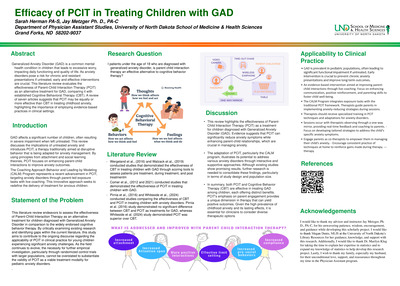
Efficacy of PCIT in Treating Children with GAD
Sarah Herman
Generalized Anxiety Disorder (GAD) is a common mental health condition in children that leads to excessive worry, impacting daily functioning and quality of life. As anxiety disorders pose a risk for chronic and resistant presentations if untreated, early and effective interventions are crucial. This literature review evaluates the effectiveness of Parent-Child Interaction Therapy (PCIT) as an alternative treatment for GAD, comparing it with established Cognitive Behavioral Therapy (CBT). A review of seven articles suggests that PCIT may be equally or more effective than CBT in treating childhood anxiety, highlighting the importance of employing evidence-based practices in clinical settings
-
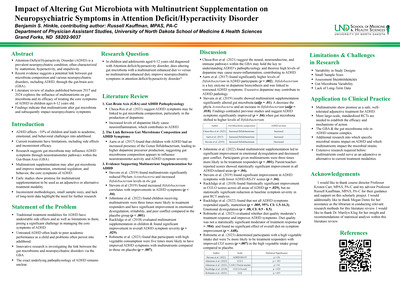
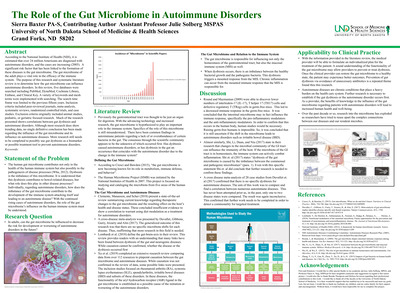
Impact of Altering Gut Microbiota with Multinutrient Supplementation on Neuropsychiatric Symptoms in Attention Deficit/Hyperactivity Disorder
Benjamin Hinkle
§ Attention-Deficit/Hyperactivity Disorder (ADHD) is a prevalent neuropsychiatric condition, often characterized by inattention, hyperactivity, and impulsivity. § Recent evidence suggests a potential link between gut microbiota composition and various neuropsychiatric disorders, including ADHD, through the gut-brain axis (GBA). § Literature review of studies published between 2017 and 2024 explores the influence of multinutrients on gut microbiota and its efficacy of treating the core symptoms of ADHD in children ages 6-12 years old. § Findings indicate that multinutrients alter gut microbiota and subsequently impact neuropsychiatric symptoms.
-

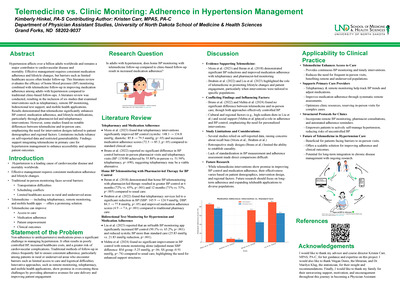
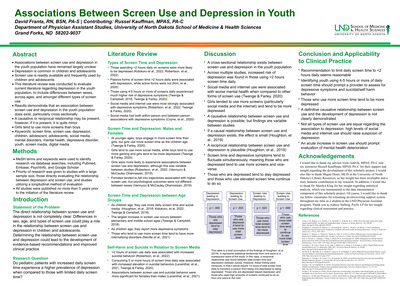
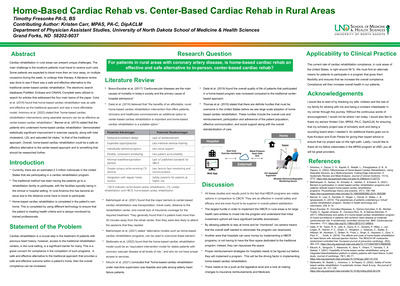
Telemedicine vs. Clinic Monitoring: Adherence in Hypertension Management
Kimberly Hinkle
Hypertension affects over a billion adults worldwide and remains a major contributor to cardiovascular disease and mortality. Effective management requires consistent medication adherence and lifestyle changes, but barriers such as limited healthcare access often hinder follow-up. This literature review evaluates the efficacy of home blood pressure (BP) monitoring combined with telemedicine follow-up in improving medication adherence among adults with hypertension compared to traditional clinic-based follow-ups. A literature review was conducted, resulting in the inclusion of six studies that examined interventions such as telepharmacy, remote BP monitoring, bidirectional text support, and mobile health applications. Results demonstrated that telemedicine significantly enhances BP control, medication adherence, and lifestyle modifications, particularly through pharmacist-led and telepharmacy interventions. However, some studies found no notable differences between telemedicine and in-person care, emphasizing the need for intervention designs tailored to patient demographics and regional factors. Limitations include reliance on self-reported data and restricted generalizability. Findings support integrating telemedicine in primary care for hypertension management to enhance accessibility and optimize patient outcomes
-

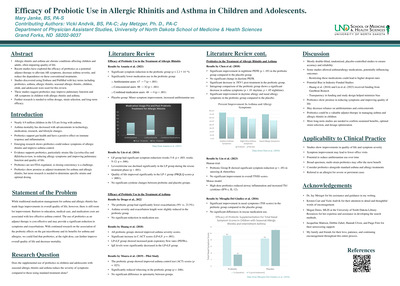
Efficacy of Probiotic Use in Allergic Rhinitis and Asthma in Children and Adolescents
Mary Janke
• Allergic rhinitis and asthma are chronic conditions affecting children and adults, often impairing quality of life. • Recent studies have explored the efficacy of probiotics as a potential adjunct therapy to alleviate AR symptoms, decrease asthma severity, and reduce the dependence on these conventional treatments. • Studies discovered using Embase and PubMed with key terms including probiotics, asthma, allergic rhinitis, seasonal allergic rhinitis, children, child, and adolescent were used for this review. • These studies suggest probiotics may improve pulmonary function and AR symptoms in children with allergic rhinitis and asthma. • Further research is needed to refine dosage, strain selection, and long-term efficacy.
-
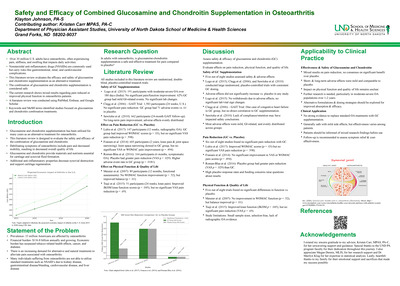
Safety and Efficacy of Combined Glucosamine and Chondroitin Supplementation in Osteoarthritis
Klayton Johnson
• Over 30 million U.S. adults have osteoarthritis, often experiencing pain, stiffness, and swelling that impacts daily activities. • Nonsteroidal anti-inflammatory drugs (NSAIDs) are commonly used but carry risks like gastrointestinal, renal, and cardiovascular complications. • This literature review evaluates the efficacy and safety of glucosamine and chondroitin supplementation as an alternative treatment. • The combination of glucosamine and chondroitin supplementation is considered safe. • The current research shows mixed results regarding pain reduced or improved physical function in osteoarthritis patients. • A literature review was conducted using PubMed, Embase, and Google Scholar. • Keywords and MeSH terms identified studies focused on glucosamine and chondroitin combination treatments.
-
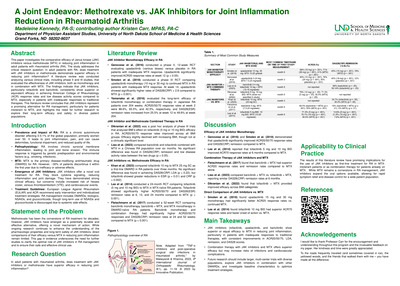
A Joint Endeavor: Methotrexate vs. JAK Inhibitors for Joint Inflammation Reduction in Rheumatoid Arthritis
Madeleine Kennedy
This paper investigates the comparative efficacy of Janus kinase (JAK) inhibitors versus methotrexate (MTX) in reducing joint inflammation in adult patients with rheumatoid arthritis (RA). The study addresses the critical research question: In adult patients with RA, does treatment with JAK inhibitors or methotrexate demonstrate superior efficacy in reducing joint inflammation? A literature review was conducted analyzing various clinical trials, including phase II and III studies, that evaluated the effectiveness of JAK inhibitors, both as monotherapy and in combination with MTX. The findings indicate that JAK inhibitors, particularly tofacitinib and baricitinib, consistently show superior or equivalent efficacy in achieving American College of Rheumatology (ACR) response rates and low disease activity scores compared to MTX, especially in patients with inadequate responses to traditional therapies. This literature review concludes that JAK inhibitors represent a promising alternative for RA management, particularly for patients intolerant to MTX, and highlights the need for further research to explore their long-term efficacy and safety in diverse patient populations.
-

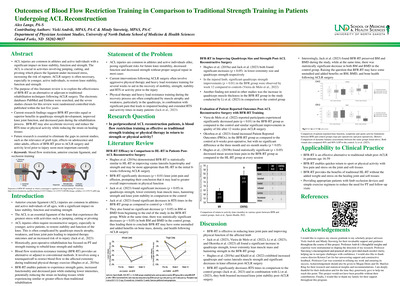
Outcomes of Blood Flow Restriction Training in Comparison to Traditional Strength Training in Patients Undergoing ACL Reconstruction
Alex Lange
• ACL injuries are common in athletes and active individuals with a significant impact on knee stability, function and strength. The ACL is crucial in activities involving jumping, cutting, and pivoting which places the ligament under increased stress, increasing the risk of rupture. ACLR surgery is often necessary, especially in younger, active individuals, to restore knee stability, function and strength • The purpose of this literature review is to explore the effectiveness of BFR-RT as an alternative or adjuvant to traditional rehabilitation techniques following ACLR surgery. The electronic databases PubMed and Embase were searched, and the seven studies chosen for this review were randomized controlled trials published within the last five years • Current research findings suggest BFR-RT provides equal or superior benefits in quadriceps strength development, improved knee joint function, and decreased pain during the rehabilitation process. BFR-RT may also accelerate recovery and reduce the RTS time or physical activity while reducing the strain on healing tissues • Future research is essential to eliminate the gaps in current studies, such as the relevance of graft type, effects on adolescence and older adults, effects of BFR-RT prior to ACLR surgery and activity level prior to injury seem most important currently
-

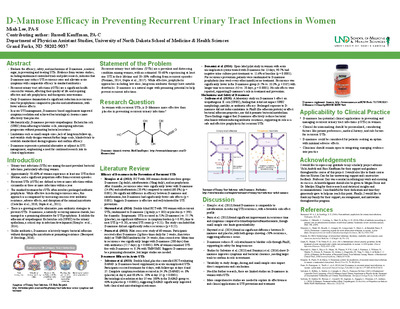
D-Mannose Efficacy in Preventing Recurrent Urinary Tract Infections in Women
Miah Lee
• Evaluate the efficacy, safety, and mechanisms of D-mannose, a natural sugar, in preventing and treating UTIs. Evidence from various studies, including randomized controlled trials and pilot research, indicates that D-mannose may reduce UTI recurrence rates and alleviate acute symptoms with comparable efficacy to standard antibiotics. • Recurrent urinary tract infections (rUTIs) are a significant health concern for women, affecting their quality of life and requiring effective and safe prophylactic and therapeutic interventions. • Daily D-mannose demonstrated a significant reduction in recurrence rates for prophylaxis compared to placebo and nitrofurantoin, with fewer adverse effects. • In acute UTI management, D-mannose-based supplements improved symptom resolution and achieved bacteriological clearance more effectively than placebo. • Mechanistically, D-mannose prevents uropathogenic Escherichia coli (UPEC) from adhering to bladder cells, interrupting infection progression without promoting bacterial resistance. • Limitations such as small sample sizes, lack of long-term follow-up, and variable study designs warrant further large-scale, blinded trials to establish standardized dosing regimens and confirm efficacy. • D-mannose represents a potential alternative or adjunct in UTI management, emphasizing a need for continued research into its clinical applications.
-
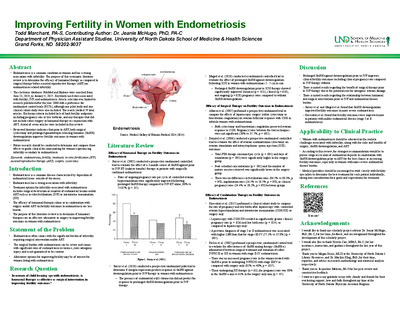
Improving Fertility in Women with Endometriosis
Todd Marchant
• Endometriosis is a common condition in women and has a strong association with infertility. The purpose of this systematic literature review is to determine the efficacy of hormonal therapy as compared to surgical therapy before assisted reproductive therapy (ART) on endometriosis-related infertility. • The electronic databases PubMed and Embase were searched from June 23, 2024, to January 4, 2025. Keywords used were associated with fertility, IVF, and endometriosis. Article selection was limited to research published after the year 2000 with a preference for randomized control trials (RCTs), although one pilot study and one clinical cohort study were also included. The search yielded 59 total articles. Exclusion criteria included lack of hard fertility endpoints including pregnancy rate or live birthrate, and any therapies that did not include either surgery or hormonal therapy in conjunction with ART. A total of seven articles were included in this review. • Reviewed literature indicates that prior to ART, both surgical cystectomy and prolonged gonadotropin releasing hormone (GnRH) downregulation improves fertility outcomes in women with endometriosis. • Future research should be conducted to determine and compare those effects to guide clinical decision making for women experiencing infertility secondary to endometriosis.
-

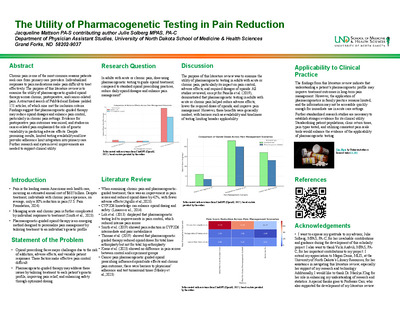
The Utility of Pharmacogenetic Testing in Pain Reduction
Jacqueline Mattson
Chronic pain is one of the most common reasons patients seek care from primary care providers. Individualized responses to pain medications make pain difficult to treat effectively. The purpose of this literature review is to examine the utility of pharmacogenetic-guided opioid therapy across chronic, postoperative, and cancer-related pain. A structured search of PubMed and Embase yielded 151 articles, of which nine met the inclusion criteria. Findings suggest that pharmacogenetic-guided therapy may reduce opioid dosages and enhance pain control, particularly in chronic pain settings. Evidence for postoperative pain outcomes was mixed, and studies on cancer-related pain emphasized the role of genetic variability in predicting adverse effects. Despite promising results, limited testing availability and low provider adherence limit integration into primary care. Further research and system-level improvements are needed to support clinical utility
-
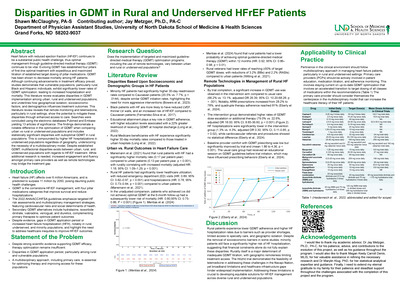
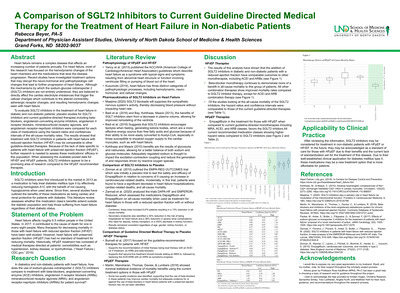
Disparities in GDMT in Rural and Underserved HFrEF Patients
Shawn McClaughry
Heart failure with reduced ejection fraction (HFrEF) continues to be a substantial public health challenge, thus optimal management through guideline-directed medical therapy (GDMT) continues to be vital. Evolving GDMT has established four pillars of first-line optimal treatment with expeditious and maximized titration of established target dosing of pillar medications. GDMT has been shown to decrease mortality among HF patients. Although continuing advancements in treatment efficacy prevail, studies demonstrate that vulnerable populations, particularly rural, Black and Hispanic individuals, exhibit significantly lower rates of GDMT optimization, leading to increased hospitalization and mortality. This literature review evaluates disparities in GDMT implementation among urban, rural and underserved populations, and underlines how geographical isolation, socioeconomic factors, and demographics influences treatment outcomes. This literature review reveals that remote monitoring and telemedicine, particularly in rural settings, show the potential to mitigate these disparities through enhanced access to care. Searches were concluded using the electronic databases Pubmed and Embase yielding 13 articles of significance. The findings demonstrate a notable difference in the optimization of GDMT when comparing urban vs rural or underserved populations and includes statistically significant disparities with suboptimal GDMT in rural populations. This is compounded by higher HF hospitalizations in underserved populations regardless of geography, underscoring the necessity of a multidisciplinary model. Despite established GDMT, multifactorial disparities exists between urban, rural, and underserved populations with regards to HFrEF treatment. While additional research is needed, increased engagement and fluency amongst primary care providers as well as remote technologies may bridge the treatment gap
-

Efficacy of Prediabetes Management Options for Lowering Cardiovascular Risk
Cassidy Mindeman
• ≈ 86 million people in the United States are diagnosed with prediabetes: a metabolic syndrome characterized by insulin resistance and inflammation. • Inflammatory nature of the disease increases a patient's cardiovascular risk. • Common treatment options include metformin and lifestyle intervention – primarily exercise and diet plans. However, there is no standard medical recommendation for lowering cardiovascular risk. • Purpose: Determine which treatment options, including the combination of lifestyle and intervention, best lower cardiovascular risk and better detail the effect of prediabetes on cardiovascular risk • Current research provides data showing that prediabetes increases the risk of hypertension and mortality from cardiovascular event. • Reversal from prediabetes to normoglycemia lowered risk of cardiovascular event by almost 50%. • Lifestyle interventions was the best method for lowering cardiovascular risk, while metformin was found to lower the effects of lifestyle intervention when studying the combination of the two. • Future research should determine best course of treatment for patients who aren’t able to complete lifestyle intervention goals such as patients who are bedridden or frail. • Gaining a better understanding of the interaction between metformin and lifestyle intervention will serve invaluable for the future of prediabetes treatment. This research should aid in provider treatment recommendations for prediabetic patients and better detail a “standard” of care.
-
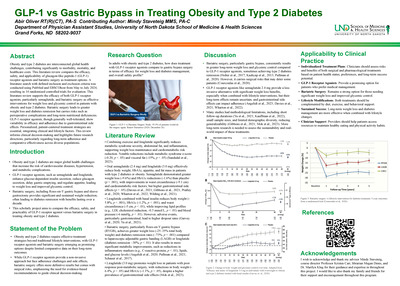
GLP-1 vs Gastric Bypass in Treating Obesity and Type 2 Diabetes
Abir Oliver
Obesity and type 2 diabetes are interconnected global health challenges, contributing significantly to morbidity, mortality, and healthcare costs. This literature review compares the efficacy, safety, and applicability of glucagon-like peptide-1 (GLP-1) receptor agonists and bariatric surgery as treatment options. A literature search with defined inclusion and exclusion criteria was conducted using PubMed and EBSCOhost from May to July 2024, resulting in 14 randomized controlled trials for evaluation. This literature review supports the efficacy of both GLP-1 receptor agonists, particularly semaglutide, and bariatric surgery as effective interventions for weight loss and glycemic control in patients with obesity and type 2 diabetes. Bariatric surgery leads to greater weight loss and diabetes remission but carries risks such as perioperative complications and long-term nutritional deficiencies. GLP-1 receptor agonists, though generally well-tolerated, show variability in efficacy and adherence due to gastrointestinal side effects. Personalized, patient-centered treatment strategies are essential, integrating clinical and lifestyle factors. This review informs clinical decision-making and highlights future research directions, particularly regarding long-term adherence and comparative effectiveness across diverse populations.
-
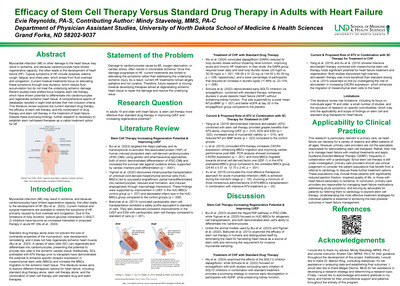
Efficacy of Stem Cell Therapy Versus Standard Drug Therapy in Adults with Heart Failure
Evie Reynolds
Myocardial infarction (MI) or other damage to the heart tissue may result in ischemia, and because cardiomyocytes have limited regenerative capacity, this often leads to the development of heart failure (HF). Typical symptoms of HF include dyspnea, edema, cough, fatigue, and chest pain, which arises from fluid overload and congestion. Current medical treatments focus on alleviating these symptoms through loop diuretics, which reduce fluid accumulation but do not treat the underlying ischemic damage. Recent studies have shifted focus towards stem cell therapy, which have shown potential to differentiate into cardiomyocytes and regenerate ischemic heart tissue. A comprehensive search of databases resulted in eight total articles that met inclusion criteria. This literature review explores the current standard drug therapy, the efficacy of stem cell therapy, and the combination of drug therapy and stem cell therapy in the treatment of heart failure. Despite these promising findings, further research is necessary to establish stem cell-based therapies as a viable treatment option for HF.
Printing is not supported at the primary Gallery Thumbnail page. Please first navigate to a specific Image before printing.