






-
Codex
Micah Bloom
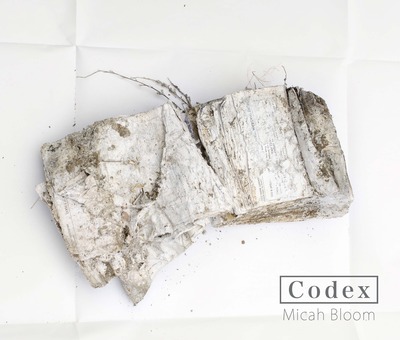
Micah Bloom’s Codex examines the fate of books in the aftermath of the 2011 Minot flood. It is an ambitious project that flows across a wide range of media (digital text, video, hardcover, and paperback), embraces archaeological sensibilities, and speaks simultaneously to universal and profoundly local experiences.
This is the digital version of the book released in 2017 by The Digital Press at the University of North Dakota (http://thedigitalpress.org/) as a numbered, large-format, print version combining Micah Bloom’s photography with nine new essays inspired by Codex. This digital text is both a stand alone book and a companion to two versions of a film (40 minutes: https://commons.und.edu/press-media/1 and 20 minutes: https://commons.und.edu/press-media/2) and a trade paperback.
-

Picking the President: Understanding the Electoral College
Eric Burin
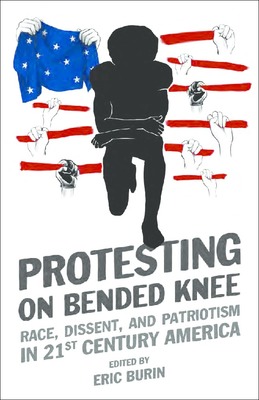
The 2016 presidential election has sparked an unprecedented interest in the Electoral College. In response to Donald Trump winning the presidency despite losing the popular vote, numerous individuals have weighed in with letters-to-the-editor, op-eds, blog posts, videos, and the like, and thanks to the revolution in digital communications, these items have reached an exceptionally wide audience. In short, never before have so many people had so much to say about the Electoral College.
To facilitate and expand the conversation, Picking the President: Understanding the Electoral College offers brief essays that examine the Electoral College from different disciplinary perspectives, including philosophy, mathematics, political science, history, and pedagogy. Along the way, the essays address a variety of questions about the Electoral College: Why was it created? How has it changed over time? Who benefits from it? Is it just? How will future demographic patterns affect it? Should we alter or abolish the Electoral College, and if so, what should replace it? In exploring these matters, Picking the President enhances our understanding of one of America’s most high-profile, momentous issues.
With contributions by Eric Burin, Brad Austin, Bill Caraher, Allen C. Guelzo and James H. Hulme, Mark Stephen Jendrysik, Donald F. Johnson, Benjamin J. Kassow, Andrew Meyer, Cynthia Culver Prescott, Timothy Prescott, Patrick Rael, Andrew Shankman, Manisha Sinha, Mark Trahant, and Jack Russell Weinstein.
For more on Picking the President, go here.
-
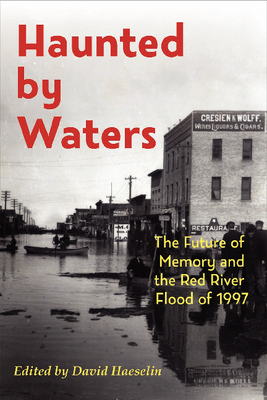
Haunted by Waters: The Future of Memory and the Red River Flood of 1997
David Haeselin
“… gives a new generation of Grand Forksers and Red River valley valley citizens the occasion to look backward so that they can look forward”
This twentieth anniversary of the Red River Flood of 1997, which devastated the town of Grand Forks, North Dakota and surrounding areas, gives a new generation of Grand Forksers and Red River valley citizens the occasion to look backward so that they can look forward. Taking stock of how the city and its people have changed in these last twenty years offers us a new chance to envision the future of Grand Forks and the Red River Valley. What’s more, we hope that this book can extend the lessons learned through the recovery to others coping with their own unique disasters.
The book emerged from a year long course in the University of North Dakota’s Writing, Editing, and Publishing Program led by Dr. David Haeselin. Students in this course compiled, organized, and edited unpublished archival documents from the Orin G. Libby Manuscript Collection in the Elwyn B. Robinson Special Collections of the Chester Fritz Library at the University of North Dakota with new contributions from citizens and experts who lived through the flood and the region’s recovery. The archival inclusions include government documents, student journalism, blueprints, design plans, and transcribed 911 calls. In pairing new stories with these archival documents, the project is set to inspire new discussions about how the city got to where it is today, so that more people can join the larger civic conversation about the right steps forward for the city, the state, the region, and our nation.
This book is not intended to be the final word on the flood. Rather, it attempts to carry on the conversation started by many other fine works that were released during the city’s recovery, many of which were originally published by the North Dakota Museum of Art. Haunted by Waters included excerpts of some of these works and provided a bibliography pointing the curious reader back to some of the seminal works on the 1997 flood and the city’s response. In this way, the book looks forward, forges new memories, and offers respectful attention to those who came before us. This is the best kind of public humanities in that it is local and civic-minded in attention and expansive in reach.
Special Credit to the Student Editors: Montana Anderson, Aly Baumer, Nik Chartrand, Sheilan Hamasoor, Luke Jirik, Ali Liffrig, Lloyd Norstedt, Hal Olson, Michala Prigge, Brendon Saseangbong, Kristie Schmit, Brian Walls
-
Corinth Excavations Archaeological Manual
Guy D.R. Sanders, Sarah A. James, and Alicia Carter Johnson
“The publication of the Corinth Excavation Manual offers us a unique view into real-life archaeological practice on one of the most important Classical sites in the Mediterranean.” Adam Rabinowitz, Associate Professor and Assistant Director, Institute of Classical Archaeology, University of Texas, Austin
The Corinth Excavations Archaeological Manual is the first major field manual published from an American excavation in Greece and among a very small number of manuals published from the Eastern Mediterranean in the last generation. The appearance of this book is timely, however, as there is a growing interest in field methods and the history of excavation practices throughout the discipline of archaeology. Moreover, Corinth Excavations has long held a special place in American archaeology in Greece as the primary training excavation for graduate students associated with the American School of Classical Studies at Athens. As a result, the field manual has had a particular influence among American excavators and projects in Greece, among Mediterranean archaeologists, and in archaeology classrooms.
Published as a technical field manual, an archival document, and a key statement of practice from a major excavation, the Corinth Excavations Archaeological Manual presents a guide for daily procedures at the Corinth Excavations, a complete record of documentation forms used in the field, and a practical glimpse into the functioning of a complex, major, project. The manual is a landmark text appropriate for the university student, the scholar of methodology, and the working field archaeologist.
“The Corinth manual has grown over the years into a comprehensive and authoritative guide to open-area, stratigraphic excavation, covering everything from excavation of pits, wells, and robbing trenches to the removal of deposits to inventorying objects in the museum. ” David Pettegrew, Associate Professor, Messiah College and author of The Isthmus of Corinth (2016).
All of the authors have worked on the excavations at Corinth in various capacities. This manual was developed under the directorship of Dr. Guy Sanders by former field directors Alicia Carter Johnson and Dr. Sarah James. Additional contributions come from past and present Corinth staff including assistant director Dr. Ioulia Tzonou-Herbst, architect James Herbst, conservator Nicol Anastasatou, and archaeologist Katerina Ragkou. The authors would also like to recognize the contributions of the many students from the American School of Classical Studies at Athens who offered valuable feedback on earlier versions of this manual over the past 10 years.
-
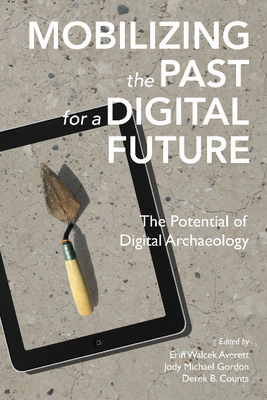
Mobilizing the Past: The Potential of Digital Archaeology
Erin Walcek Averette, Jody Michael Gordon, and Derek B. Counts
Mobilizing the Past is a collection of 20 articles that explore the use and impact of mobile digital technology in archaeological field practice. The detailed case studies present in this volume range from drones in the Andes to iPads at Pompeii, digital workflows in the American Southwest, and examples of how bespoke, DIY, and commercial software provide solutions and craft novel challenges for field archaeologists. The range of projects and contexts ensures that Mobilizing the Past for a Digital Future is far more than a state-of-the-field manual or technical handbook. Instead, the contributors embrace the growing spirit of critique present in digital archaeology. This critical edge, backed by real projects, systems, and experiences, gives the book lasting value as both a glimpse into present practices as well as the anxieties and enthusiasm associated with the most recent generation of mobile digital tools.
This book emerged from a workshop funded by the National Endowment for the Humanities held in 2015 at Wentworth Institute of Technology in Boston. The workshop brought together over 20 leading practitioners of digital archaeology in the U.S. for a weekend of conversation. The papers in this volume reflect the discussions at this workshop with significant additional content. Starting with an expansive introduction and concluding with a series of reflective papers, this volume illustrates how tablets, connectivity, sophisticated software, and powerful computers have transformed field practices and offer potential for a radically transformed discipline.
-
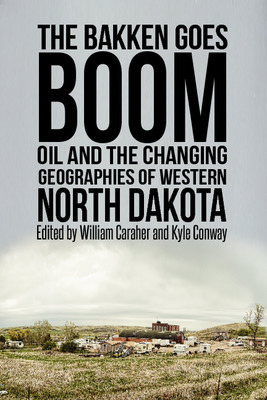
The Bakken Goes Boom: Oil and the Changing Geographies of Western North Dakota
William Caraher and Kyle Conway
In 2008, the Bakken went boom. Thanks to advances in hydraulic fracturing, oil production in western North Dakota exploded. As the price of oil went up, so did the oil rigs. People came from all over the country (and the world) in search of work, and cities and towns struggled to keep up. This book is about the challenges they faced. It is about the human dimensions of the boom, as told by artists, poets, journalists, and scholars. It captures the boom at its peak, before the price of oil fell and the boom went bust.
This is the only book on the Bakken to bring together such a wide range of voices. It captures a fascinating moment in the history not only of North Dakota, but of global oil production. It sheds light on the impact of oil on local communities that, until now, had not attracted much interest from the outside world. And it shows how North Dakotans, both old and new, have found ways to address the challenges they face in a turbulent, changing environment.
With contributions from Carenlee Barkdull, Karin L. Becker, Sebastian Braun, Nikki Berg Burin, Angela Cary, Kyle Cassidy, Heidi Czerwiec, Simon Donato, Rebecca A. Dunham, Julia C. Geigle, John Holmgren, Heather Jackson, Ann Reed, Andrew Reinhard, Richard Rothaus, Melissa Rae Stewart, Jessica Sobolik, Laura Tally, Ryan M. Taylor, Bret A. Weber, Joshua E. Young
-
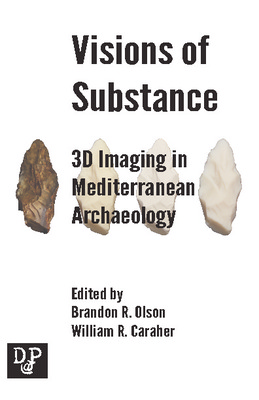
Visions of Substance: 3D Imaging in Mediterranean Archaeology
Brandon R. Olson and William R. Caraher
With the advent of low-cost and easy to use 3D imaging tools, the discipline of archaeology is on the cusp of a major change in how we document, study, and publish archaeological contexts. While there are a growing number of volumes dedicated to this subject, Visions of Substance: 3D Imaging in Mediterranean Archaeology represents an accessible and conversational introduction to the theory and practice of 3D imaging techniques in a Mediterranean and European context.
-
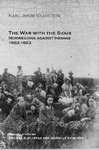
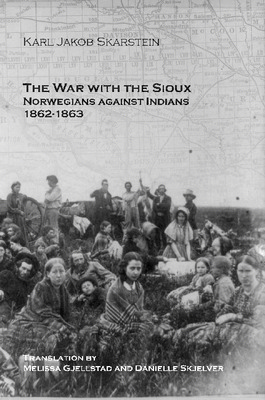
The War with the Sioux
Karl Jakob Skarstein
Translated Melissa Gjellstad and Danielle Skjelver With contributions from Dakota Goodhouse and Richard Rothaus
The Dakota War (1862-1864) ranks among the most overlooked conflicts in American History. Contemporary with the American Civil War, the Dakota War featured significant fighting, tactical brilliance, and strategic savvy set in the open landscape of the Northern Plains in Minnesota and North Dakota.
Karl Jakob Starstein’s The War with the Sioux tells the story of the Norwegian immigrants, American soldiers, and Lakota and Dakota Indians as they sought to protect their ways of life. Translated from Norwegian and supplemented with new introductions by Melissa Gjellstad, Richard Rothaus, and Dakota Goodhouse, this work draws upon newly studied sources in Norwegian for life on the Northern Plains during these tumultuous years. Skarstein’s work makes an important, new contribution to the growing body of scholarship on this conflict and offers an accessible and surprisingly intimate view of the conflict from the perspective of Norwegian settlers in the region.
-
Punk Archaeology
William Caraher, Kostis Kourelis, and Andrew Reinhard
Punk Archaeology is a irreverent and relevant movement in archaeology, and these papers provide a comprehensive anti-manifesto.
Printing is not supported at the primary Gallery Thumbnail page. Please first navigate to a specific Image before printing.