

Files
Download Full Text (15.7 MB)
Description
Many feel bewildered and quietly embarrassed that they don’t know more about how AI technology works, where it came from, or even how to get started. Start here.
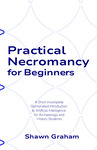
Practical Necromancy represents Shawn Graham’s vision for how we should treat large language model (LLM) artificial intelligence applications. Graham advocates approaching these technologies as a necromancer. In antiquity, the figure of the necromancer lay outside the boundaries of official religion, talking not with gods but with the mournful echoes of ghosts. Practical Necromancy explores ways of surfacing the ghosts that lurk in AI technology. Graham suggests that the most useful thing we and our students can do with LLMs is to break them, push them, prod them, make them give up the ghosts in their data. We think through making and putting things together. It’s always the process that matters, not the final product. Through short essays, hands-on exercises, and suggestions for how one might build one’s own course, Practical Necromancy is meant to give us a starting point, a way in, a place to push from.
Practical Necromancy is especially timely as the language and hype around AI is deliberately meant to make you feel as if the computers from Star Trek are just around the corner. The message is quasi-religious: the future will be glorious. This book will help you step outside the official religion and start conversations with the ghosts lurking in these new machines.
ISBN
9781966360117
DOI
10.31356/dpb034
Publication Date
2025
Publisher
The Digital Press at the University of North Dakota
City
Grand Forks, ND
Disciplines
Classical Archaeology and Art History | History
Recommended Citation
Graham, Shawn, "Practical Necromancy for Beginners: A Short Incomplete Opinionated Introduction to Artificial Intelligence for Archaeology and History Students" (2025). Digital Press Books. 34.
https://commons.und.edu/press-books/34
Creative Commons License

This work is licensed under a Creative Commons Attribution 4.0 International License.