






-
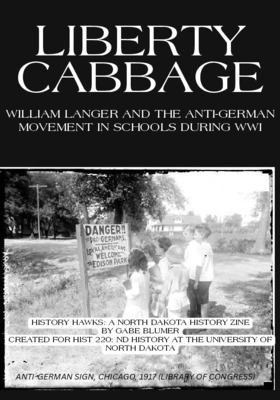
Liberty Cabbage: William Langer and The Anti-German Movement in schools during WWI
Gabe Blumer
This zine tells the story of the experience for North Dakota's German-American population during WWI, in particular, the school aspect. It also heavily focuses on William Langer and his efforts to both compromise and protect German-Americans.
-

A Look into a Volunteer Soldier's Time
Phoebe Burke
Going through the journal from Adam S. Mischel, a veteran of the Spanish-American War, and his experiences. This man was a volunteer who chose to leave North Dakota to go and fight for his country.
-
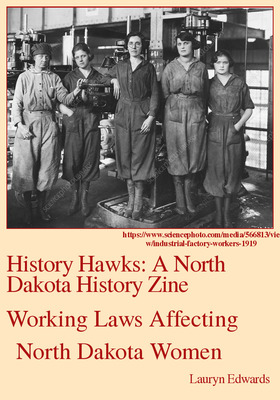
Working Laws Affecting North Dakota Women
Lauryn Edwards
After the passing of House Bill 186 in the state of North Dakota, women's working hours were cut back. This change brought challenges to the state and to businesses across North Dakota as well.
-
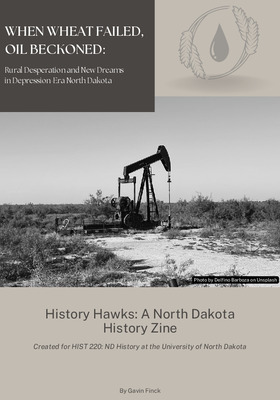
When Wheat Failed, Oil Beckoned: Rural Desperation and New Dreams in Depression-Era North Dakota
Gavin Finck
This zine explores how economic desperation during the Great Depression reshaped the attitudes of North Dakota farm families, leading them to view oil development as a potential path to survival and long-term stability. By combining scholarly research with primary-source context, it highlights how personal hardship, state leadership, and broader economic forces converged to transform oil from a speculative curiosity into a serious alternative to failing agriculture.
-
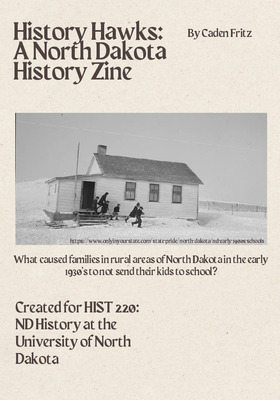
What caused families in rural areas of North Dakota in the early 1930's to not send their kids to school
Caden Fritz
Family poverty, Farmstead labor, school distance, and cultural traditions caused families who lived in rural areas of North Dakota to keep their kids out of school in the early 1900's. As a result, it interfered with state school laws.
-
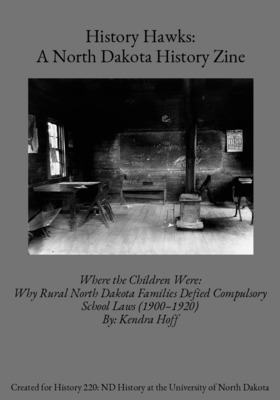
Where the Children Were: Why Rural North Dakota Families Defied Compulsory School Laws (1900-1920)
Kendra Hoff
Through archival letters between rural parents and state officials, this zine tells the story of how compulsory schooling laws collided with everyday life on the North Dakota prairie. It reveals that children's absences from school were often acts of necessity and negotiation rather than neglect or defiance.
-
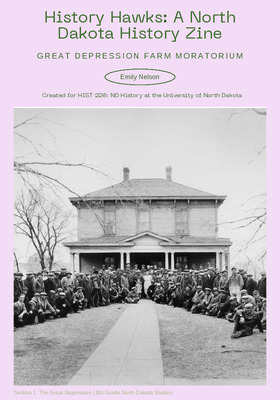
Great Depression Farm Moratorium
Emily Nelson
This zine examines the effects of Governor Langer's Great Depression farm moratorium on North Dakota farmers and citizens.
-
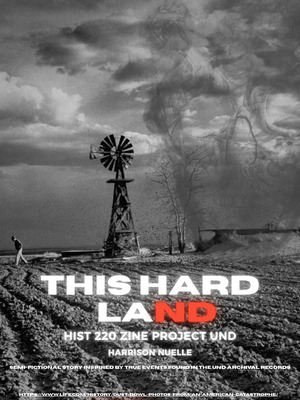
Communication Between North Dakotan's and Their Government
Harrison Nuelle
This historical analysis follows the story of a fictional character, Dan Barnes. Dan Barnes is a combination of three real people and their struggles during the Great Depression in North Dakota. We see his letters with Governor Langer, and also get some background information on how the Great Depression hit North Dakota. The purpose of this story is to highlight the dialogue that was had between North Dakotans and their elected officials.
-
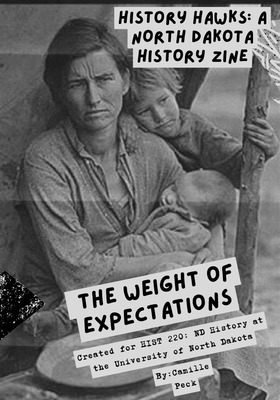
The Weight of Expectations
Camille Peck
Discover the struggles men and husbands faced during the Great Depression in North Dakota, under intense social pressures from their wives and society as a whole.
-
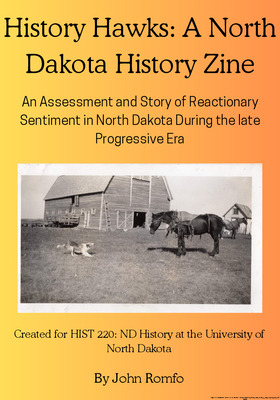
History Hawks A North Dakota History Zine: An Assessment and Story of Reactionary Sentiment in North Dakota During the Late Progressive Era
John Neil Romfo
This zine looks at reactionary sentiment towards the NPL/socialist movement in North Dakota from 1916-1920. To convey this, a fictional story inspired by real letters and evidence comprises most of the zine.
-
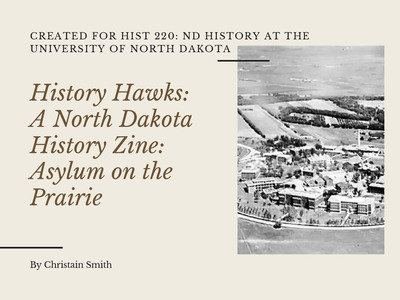
Asylum on the Prairie
Christain Smith
Asylum on the Prairie is a short history zine that examines the rise, abuse, and eventual reform of the Jamestown State Hospital, revealing the contradictions at the heart of early American asylums--institutions founded on care but shaped by neglect and stigma. Tracing the hospital from its 1885 opening through the 1937 scandal and later deinstitutionalization, it highlights how systemic failures persisted until public outrage forced change. Ultimately, the zine reflects on Jamestown as a cautionary example of how vulnerable populations can be failed without accountability and humane oversight.
-
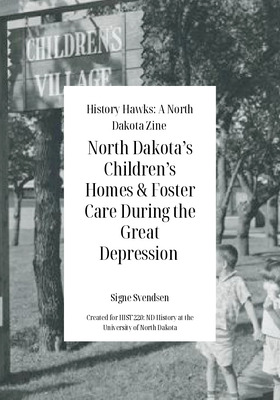
North Dakota's Children's Homes & Foster Care During the Great Depression
Signe Svendsen
This zine explores the experiences of children placed in North Dakota's children's homes and foster care systems during the Great Depression. As poverty, unemployment, and family instability increased, many children were separated from their families, revealing how economic crisis reshaped child welfare in the state, and how this affected families.
-
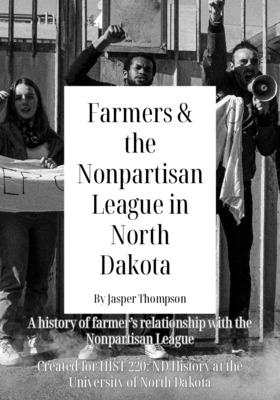
Farmers & the Nonpartisan League in North Dakota
Jasper Thompson
This zine covers the turbulent and short lived relationship between North Dakota farmers and the Nonpartisan League. It includes the NPL's rise to power as well as the backlash they received, which led to their eventual downfall in the state of North Dakota.
-
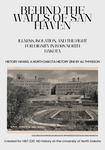
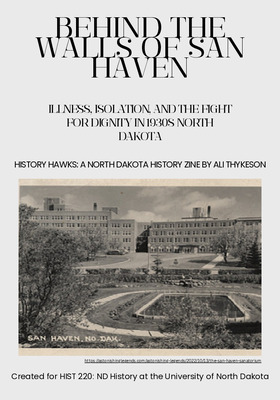
Illness, Isolation, and the Fight for Dignity in 1930s North Dakota
Ali Thykeson
Behind the Walls of San Haven explores life at North Dakota's tuberculosis sanatorium in the 1930s. Through patient letters, archival photographs, and historical research, the zine reveals how medical practices, public attitudes, and state policies shaped the experiences of those confined to the institution. It highlights the human stories behind San Haven and the reforms that emerged from its challenges.
-
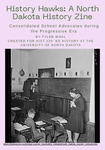
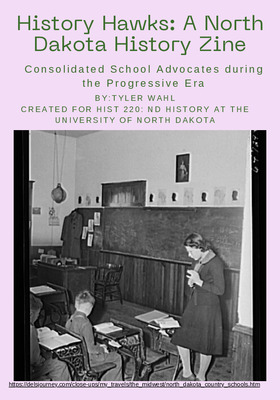
Consolidated School Advocates during the Progressive Era
Tyler Wahl
This is a Zine about consolidated school advocateds during the progressive era. North Dakota had a couple of issues with their schools including attendence and poor teachers and consolidation sought to fix this.
-
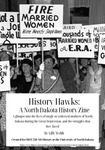
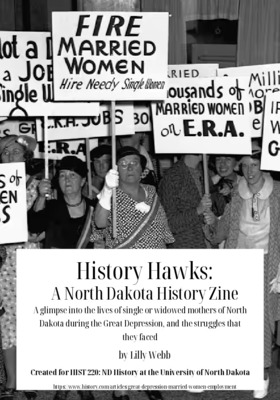
History Hawks: A North Dakota History Zine
Lillian Webb
A glimpse into the lives of single or widowed mothers of North Dakota during the Great Depression, and the struggles that they faced.
-
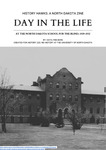
Day in the Life at the North Dakota School for the Blind; 1929-1932
Katelynn Berg
This zine describes a day in the life at the North Dakota School for the Blind during the early years of the Great Depression. The goal is to analyze if and how the school and its students were affected by the Great Depression.
-
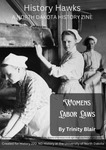
Womens Labor Laws
Trinity Blair
Women in the Progressive Era were often not protected by any laws. In 1919, North Dakota passed a law limiting women's work hours. Other states were enacting laws similar to the one in North Dakota.
-
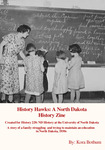
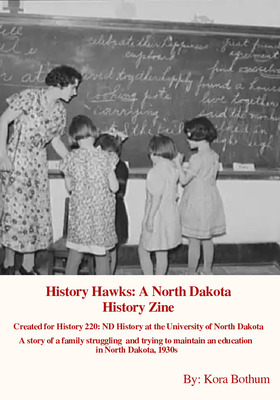
Education During Great Depression
Kora Bothum
A story of a family struggling and trying to maintain an education in North Dakota in the 1930s.
-
Prohibition and World War One in the Red River Valley
Hunter Eickhoff
This zine discusses the varying attitudes towards prohibition during the World War One era. The zine focuses on a story about a brewery owner who was convicted of smuggling alcohol across the Red River into Grand Forks.
-
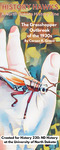
The Grasshopper Outbreak of the 1930s
Carsen Grave
The Dust Bowl sparked a massive grasshopper outbreak in the 1930s, forcing many North Dakotans to flee. Those who remained endured hardship and persevered, ultimately finding relief in a wet spring in 1940.
-
Mildred Isakson & The Country's Push for "Fairness" During the Great Depression
Aubrey Griedl
The experiences of Mildred Isakson, the Superintendent of Nurses at the North Dakota State Tuberculosis Sanatorium, or San Haven, gives insight into the hardships that working women had to face during the Great Depression, specifically married working women.
-
Lakota Life
Olivia Schulz
This zine takes place in Lakota North Dakota in the early 1920s. It addresses Attorney General William Langer and Mr. Wood with the top three crimes and fines from 1911-1917 and how they affected the community.
-
Eminent Domain and the Displacement of ND Families: The Impact of the Garrison Dam
Lauren Steeves
This zine looks at the consequences of the United States government exercising the power of eminent domain, as seen in the 1953 United States of America vs. Certain Lands case.
-
The Forgotten Men
Faith A. Vasicek
A collection of hardships from North Dakota WWI veteran's struggles during the Great Depression Era.
History Hawks: A North Dakota History Zine is a project completed by undergraduate students in History 220: North Dakota History. Zines (pronounced "zeen") are creative, self-published works that have a long history stretching back to the science fiction "fanzines" of the 1930s-1940s, the punk and feminist subcultures of the 1970s-1990s, up through today's plethora of print and digital zines covering every topic imaginable. For History 220, zine creation is a way for students to creatively share stories, knowledge, and ideas about North Dakota’s past with the general public. While students select their own historical topics and create their own designs, each History Hawks zine is based on archival research in the William Langer Papers at the University of North Dakota’s Elwyn B. Robinson Department of Special Collections.
Printing is not supported at the primary Gallery Thumbnail page. Please first navigate to a specific Image before printing.